A room can be beautifully decorated and still feel incomplete. Often, it’s not about what you see, but what you smell. Essential oils can give a room a calmer, warmer, or more energetic character—provided you don’t treat the scent as an afterthought. The right scent experience is subtly present: guests notice that it feels pleasant before they can pinpoint exactly why.
The same principle applies to a bedroom, home office, boutique, or reception area. Scent determines the first impression, masks unwanted odors, and gives a space a distinctive character. But a few drops of oil in a standard diffuser aren’t always the most refined solution. The space, the technique used, and the intensity make the difference between pleasant and overwhelming.
What essential oils do for a space
Essential oils are extracted from plants, flowers, peels, woods, or herbs. Think of fresh citrus, soothing lavender, crisp eucalyptus, or warm cedarwood. Each oil has its own scent profile and also evaporates at its own pace. Citrus notes open up quickly and vibrantly, while woody and resinous notes can linger in the air longer.
That makes scent a powerful element of your interior design. A light bergamot scent can make a kitchen or workspace feel brighter. Sandalwood and amber are better suited for a quiet evening, a stylish living room, or a hotel-like entryway. It’s not just about a pleasant scent, but about the emotion a space evokes.
Still, natural isn’t automatically better for every purpose. Pure essential oils have character, but can vary from batch to batch, and some oils evaporate quickly. High-quality fragrance compositions, on the other hand, can be specifically designed for even diffusion, consistent quality, and a long-lasting, luxurious impression. For those who want to scent an entire room, that level of control is often more valuable than the idea that an oil must, by definition, be pure.
Choose a scent based on the moment
. The best scent is rarely the one that smells the strongest coming out of the bottle. It should suit the purpose of the room and the rhythm of your day. In a bedroom, a soft, rounded composition usually works better than a sharp burst of mint or citrus. In an office, on the other hand, a fresh, clean scent can help make the environment feel alert and well-maintained.
For tranquility and a gentle, homey feeling,
lavender, chamomile, neroli, cashmere-like woody notes, and subtle musk provide a calming base. Opt for a low intensity here. A bedroom doesn’t need to be filled with scent to feel relaxing. A light presence around bedtime is usually enough.
For focus and a burst of energy
: Lemon, grapefruit, bergamot, green tea, and eucalyptus are popular choices for a workspace, entryway, or bathroom. These scents quickly create a clean, fresh
atmosphere. Be mindful of the dosage, though: eucalyptus and peppermint, in particular, can quickly become overpowering in a small, enclosed room.
For warmth and a luxurious welcome
In living rooms, stores, and reception areas, scents can be a bit more layered. Think fig, cedarwood, amber, tonka, leathery accords, or white flowers. These scents often feel richer and linger longer in the memory. They work particularly well when you want a space to feel well-curated, personal, and thoughtfully chosen.
A good rule of thumb: don’t just choose what you personally like on a scent strip, but rather what you want people to feel when they walk in. Fresh and crisp, relaxed and soft, or warm and exclusive? Once you have that feeling in mind, choosing a scent becomes much easier.
The right diffuser makes all the difference
. A scent can only smell elegant if it’s diffused evenly. Traditional oil burners use heat, while ultrasonic diffusers atomize oil with water. Both can be pleasant for a small room and short-term use. However, they do require attention: refilling water, cleaning, and replenishing the oil are all part of the process.
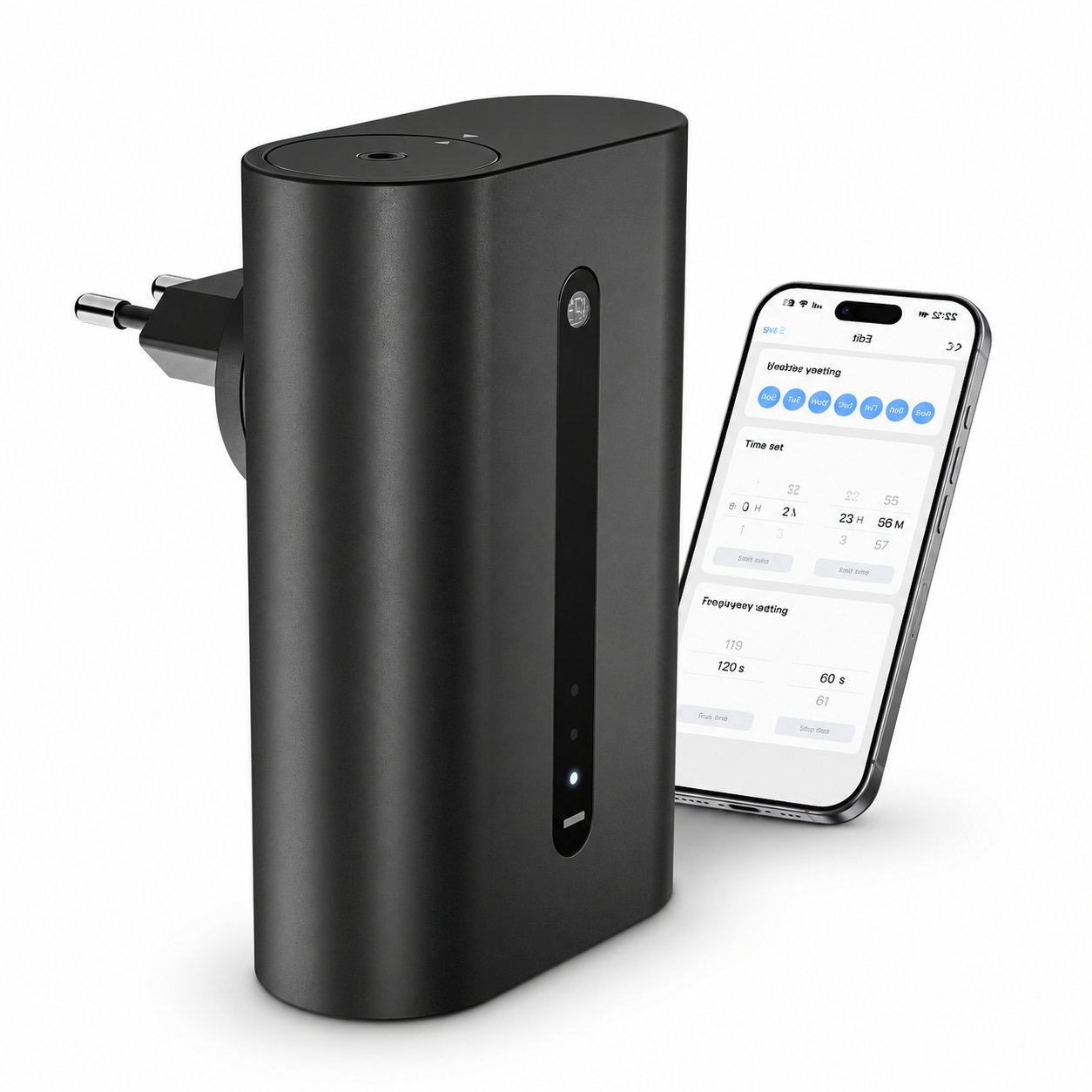
For a more consistent fragrance experience in larger spaces, waterless electric diffusers are often more suitable. They disperse scent without visible mist or an open flame and can regulate the intensity more precisely. This makes them appealing to people who want their home to smell inviting every day, without having to go through a daily ritual.
When choosing a diffuser, consider not only the design but, above all, the coverage area. A compact diffuser is ideal for a bathroom, bedroom, or home office, but will have little effect in an open living space. Conversely, a powerful system can quickly feel too intense in a small room. Therefore, measure the space and take into account open doors, high ceilings, ventilation, and air currents.
Smart controls add an extra layer of convenience. For example, with a schedule , you can have the scent start before you get home, turn it down while you sleep, or activate it only during business hours. A premium scent experience should adapt to your life, not the other way around.
Dosing Essential Oils Safely and Thoughtfully
More scent doesn’t mean more luxury. It’s actually the right amount of restraint that gives a space class. Always start with a lower intensity than you think you’ll need and only increase it after a few hours. Your nose quickly gets used to scents. If you can no longer smell anything after ten minutes, you may end up adding more than necessary, even though visitors can still clearly smell the scent.
When using essential oils in a water diffuser, it’s wise to follow the device’s instructions. The amount needed depends on the reservoir’s capacity, the oil, and the size of the room. It’s better to use several short sessions rather than one long, intense diffusion. This keeps the scent clean and refined rather than overpowering.
Do not use pure essential oil undiluted on skin, furniture, or fabrics, unless the product is specifically intended for that purpose. Some oils may cause stains, damage surfaces, or irritate the skin. Citrus oils require extra caution, as they may be more sensitive to light when used on the skin.
Pets, children, pregnancy, asthma, and sensitivity to scents also call for a cautious approach. Ventilate regularly and use low settings. When in doubt, a milder fragrance blend or a shorter duration of use is often the better choice. Comfort is personal, and a pleasant scent experience always leaves room to breathe freely.
Make scent a recognizable interior detail
The most stylish spaces don’t change their scented candles, room sprays, and oils every day. They build a recognizable foundation. You can think of this as an olfactory signature: a scent that visitors will gradually come to associate with your home, studio, or business.
Start with one signature scent for the main room. Then choose a related, lighter scent for the bedroom or bathroom. This creates cohesion without everything smelling exactly the same. For example, a fresh citrus scent in the kitchen can complement a warmer, woody scent in the living room, as long as they share a common note or have a similar vibe.
For commercial spaces, consistency is even more important. In a boutique, salon, or office, scent enhances your brand’s image. Changing scents too often makes the experience less recognizable. A carefully chosen scent, diffused at the right moments and with consistent intensity, feels more professional than a strong scent that occasionally overwhelms the space.
At FUSIFY LX, this concept goes beyond just perfume. Together, a diffuser and scent pod create a controlled layer of ambiance for your interior: subtle, stylish, and tailored to the size of the space. That’s the difference between a scent that’s merely present and an environment that feels deliberately designed.
When a scent doesn’t work as well
If a scent fades after a short time, it’s not always the oil’s fault. A diffuser that’s too small, strong air conditioning, open windows, or high air circulation can limit the scent’s diffusion. Sometimes the problem is actually the opposite: the diffuser is too close to a couch, desk, or bed, causing the scent to become too concentrated in that area.
Place the diffuser in an open, stable spot where air can circulate, but not right next to a vent. Avoid direct sunlight and do not place the device behind large pieces of furniture. In a large open space, a central placement or a diffuser with a wider range may be necessary.
If a room continues to smell unpleasant despite the scent, address the source first. Scent cannot mask a moisture problem, a full trash can, or fabrics that trap odors. A clean base enhances any fragrance and prevents luxurious notes from taking on an unwanted undertone.
Ultimately, a refined fragrance doesn’t require a room to be filled with it, but rather a thoughtful presence. Choose a fragrance that suits your space, use the right technique, and let it do its work in the background. Then coming home, working, or entertaining guests will not only be more enjoyable, but will also feel more like you.