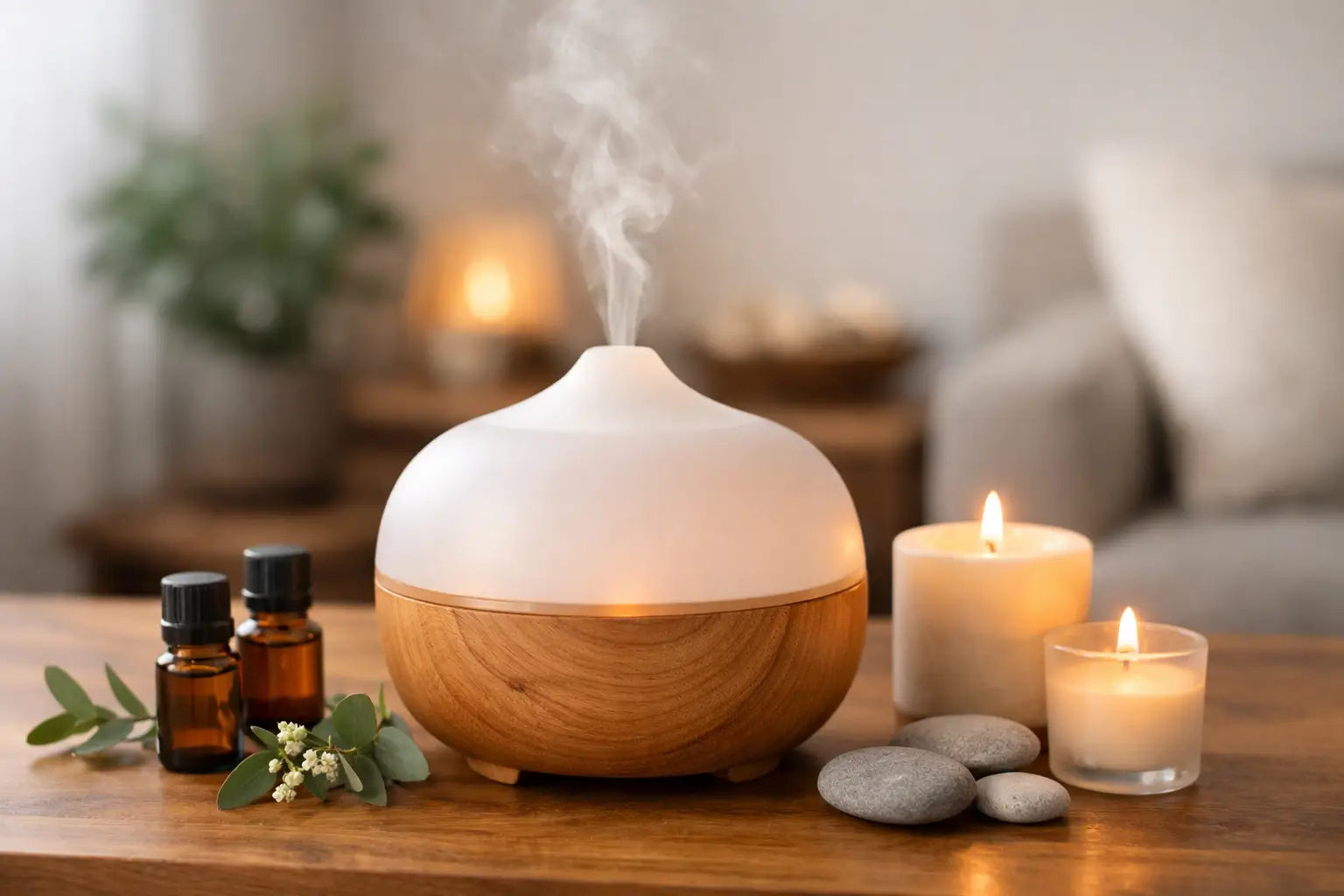
A room can look perfect and still feel incomplete. Often, the difference isn’t an extra pillow or a new piece of art, but what’s in the air. Essential oils can give a room a distinctive character: fresh upon entering, calmer in the evening, or invigorating enough to help you focus during a workday. The trick isn’t to diffuse as much scent as possible, but to create just the right atmosphere.
For a refined interior, scent works best as a detail that people sense before they consciously identify it. Think of a soft woody note in the entryway, a light citrus scent in a home office, or a calm, herbal base in the bedroom. In this way, scent becomes more than just a solution for unwanted odors. It becomes part of how a space makes you feel at ease.
What exactly is essential oil?
Essential oil is a highly concentrated extract from plants, flowers, peels, leaves, resins, or wood. The oil carries the aromatic character of, for example, lavender, eucalyptus, lemon, peppermint, or cedarwood. Because the concentration is high, just a few drops can have a noticeable effect on the scent experience in a room.
That makes essential oils appealing, but it also requires careful consideration. A bottle with a natural label isn’t automatically suitable for every application. The origin, composition, concentration, and method of diffusion all work together to determine whether a scent remains subtle and pleasant. Therefore, don’t base your choice solely on your first impression of the scent, but also on the space where you intend to use it and the system that diffuses the scent.
An important distinction: essential oil is different from perfume oil or a blended home fragrance. Perfume oil can combine natural and synthetic fragrances to create a more complex, long-lasting scent experience. That’s neither better nor worse, just different. For a luxurious hotel atmosphere, leathery notes, or an elegant amber base, a professionally blended fragrance oil is often a better choice than a single pure plant oil.
Choosing Essential Oils by Room
The right scent follows the rhythm of a room. An open living space usually calls for something that smells clean, warm, and inviting without being overpowering. Fresh green notes, soft citrus, bergamot, and light woody notes often work well there. In a kitchen, lemony or herbal scents work well, especially if you want to soften cooking odors without making the space smell like cleaning products.
In a bedroom , the scent can be softer and more subtle. Lavender, cedarwood, chamomile, and a mild floral note can help create a relaxing atmosphere. Keep the scent diffusion lighter here than in a living room. What’s pleasantly present during the day can quickly become too overpowering in a small bedroom.
A home office or boutique calls for a more defined direction. Citrus, rosemary, pine, and eucalyptus often create a fresh, polished feel. For a reception area, a warm scent with woody, musky accents, or subtle spices works particularly well: it’s welcoming, polished, and memorable. The best choice depends on the desired atmosphere. Fresh scents feel energetic, woody scents feel comforting, and a refined floral scent feels softer and more elegant.
Think in layers, not in individual scents
. Just like a good interior, a beautiful scent needs contrast. Lemon on its own can feel sharp and fleeting. Vanilla alone can feel heavy. So combine a fresh top note with a calm base—for example, bergamot with cedarwood or mandarin with a soft, spicy undertone. Always start small. Only add more if, after ten to fifteen minutes, you notice the scent is truly too subtle.
When different spaces flow into one another, there’s no need for every room to have a completely different scent. Instead, choose a single scent family that runs throughout the house. A fresh entryway, a slightly warmer living room, and a soft bedroom can still feel like a cohesive whole. This lends an interior a subtle sense of luxury.
The Right Diffuser Makes All the Difference
Essential oils truly shine only when the diffusion method suits the space. A small ultrasonic diffuser with water can be pleasant for a compact room and brief moments of fragrance. It emits a gentle mist, but typically has a more limited range and requires regular cleaning. Water residue and oil can build up, causing the scent to lose its purity over time.
For larger living spaces, , offices , , or stores, controlled scent diffusion is often a better choice. Systems that diffuse scent without water typically distribute the aroma more evenly and maintain a more consistent scent. You can also adjust the intensity to suit the time of day—a bit fresher in the morning, and warmer and softer in the evening.
Always follow the instructions for your diffuser. Not every device is designed for pure essential oil. Some models are intended exclusively for water with a limited number of drops, while others work with specific scent bottles or scent pods. Never simply pour oil into a reservoir, cartridge, or air intake. This can damage parts, cause clogs, and void the warranty.
If you want a consistent, elegant scent experience without daily refills, it’s best to choose a system with formulated refills that are compatible with the device. For example, the FUSIFY LX smart diffusers are designed to work with matching scent pods, ensuring that the scent is diffused in a controlled, quiet manner that suits the space.
Dosage: Less Is Often More Luxurious
The most common mistake with essential oils is using too much. A scent that hits you strongly right away can feel tiring or even overpowering after half an hour. Luxury never smells like something needs to be masked. It smells clean, intentional, and balanced.
With a water diffuser, it’s wise to start with a low dosage: first follow the device’s manual and increase the dosage only when the space calls for it. The size of the room, ceiling height, ventilation, and open doors all play a role. A scent in a closed bedroom behaves very differently from the same scent in a bright living room with an open kitchen.
Habituation also plays a role. After a while, you’ll notice your home fragrance less strongly, while visitors will still clearly detect it. So don’t turn up the diffuser just because you think the scent has faded. Instead, turn it off every now and then, or use a timer. That way, the scent remains special rather than just background noise.
Safe Use of Essential Oils Just because something is
natural doesn’t automatically mean it’s risk-free. Essential oils are concentrated and should be used with care. Avoid direct skin contact with undiluted oil, and do not ingest the oil unless a qualified healthcare professional provides personalized advice. Using essential oils in your home is different from aromatherapy as a treatment, and scent is no substitute for medical care.
Do you have pets, young children, people with asthma, allergies, or those with scent sensitivity in your home? If so, choose your oils with extra care. Some oils may be unsuitable for animals or people with sensitive airways, especially in small, poorly ventilated spaces. Ensure proper ventilation, keep products out of reach of children and pets, and stop diffusing if anyone experiences irritation, a headache, or shortness of breath.
Also, do not use essential oils to mask a persistent musty, moldy, or sewer-like odor. Find the source first. A sophisticated fragrance layered over a moisture problem might feel better temporarily, but it doesn’t actually freshen up a space. A clean foundation is always the first layer of a pleasant-smelling interior.
A scent that continues to suit your space
Scents change with the season, the daylight, and how you use a space. In the spring and summer, a light citrus, tea, or green scent often feels natural. In the fall and winter, notes of amber, wood, soft herbs, and warm floral tones can take center stage. You don’t have to replace everything every month, but a small seasonal change keeps your home feeling lively.
Also consider the materials used in your interior. Light wood, linen, and natural stone call for different scent notes than dark leather, velvet, and brass. A cool, mineral scent can be beautiful in a modern, minimalist apartment. In a warmly decorated family home, a rounded woody or cashmere-like note actually adds more depth.
Ultimately, the best fragrance choice is a personal one. It’s not the oil with the strongest scent, but the fragrance that makes your home, workplace, or store feel exactly as you intended: well-kept, inviting, and unforgettable.