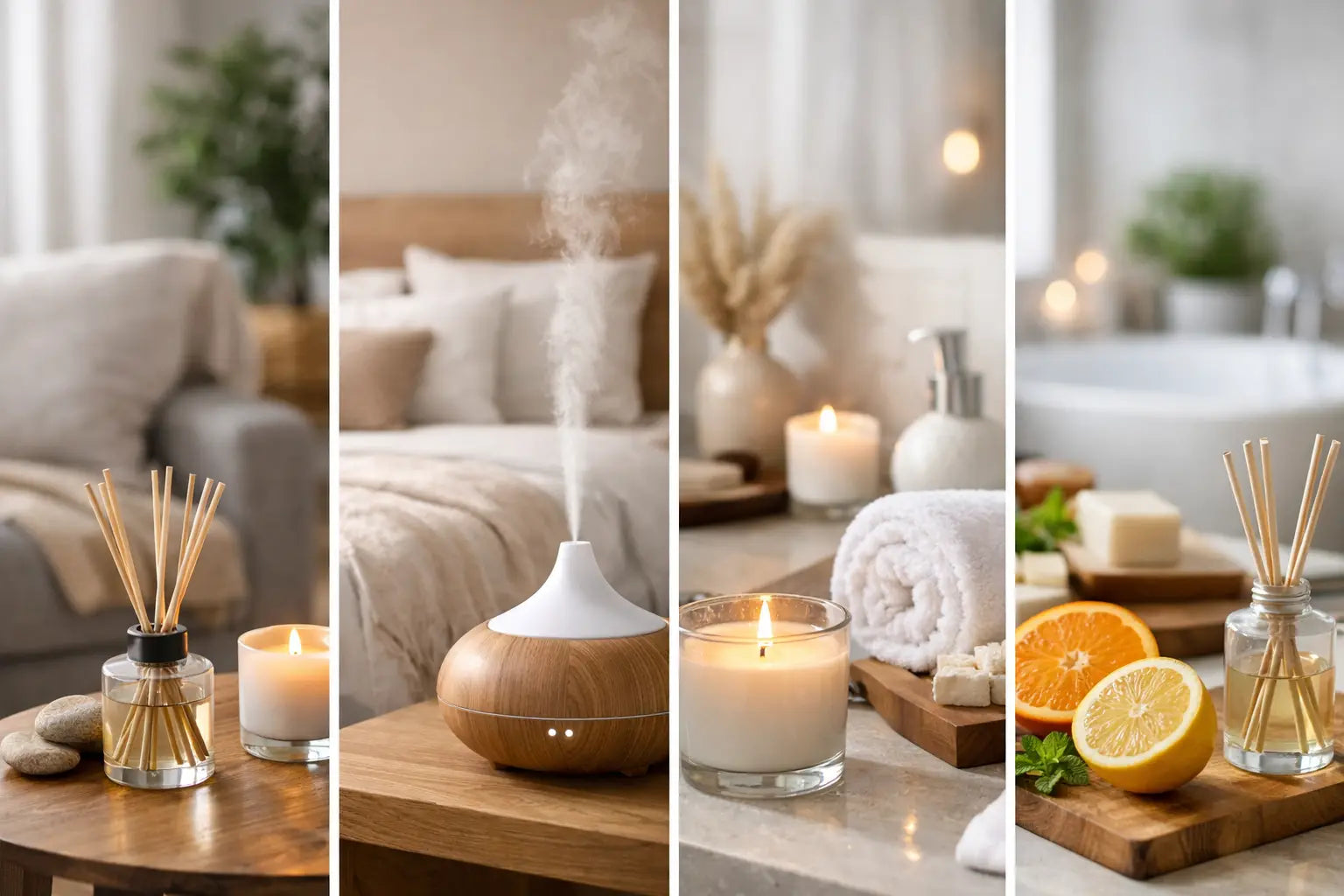
A room can look beautiful and still feel uninviting. Often, the difference isn’t an extra pillow, piece of art, or designer lamp, but what you smell the moment you walk in. With this guide to home scents by room type , you can give each space its own signature: inviting at the entrance, calming in the bedroom, and refreshing where concentration is needed.
A scent works best when it complements a room’s function, size, and atmosphere. A scent that’s too sweet in a compact bathroom can quickly become overpowering. A light citrus note in a spacious living room, on the other hand, might fade away before it has a chance to make an impression. The trick lies in finding the right balance, fine-tuning the scent, and choosing a diffuser that suits the size of your space.
The Basics of Home Fragrance by Room Type
Don’t just consider the scent itself, but also the airflow, the square footage, and how intensively the space is used. An open kitchen requires a different approach than a closed-off home office. High ceilings, open doors, and mechanical ventilation spread scent more quickly, but often require a stronger setting or a diffuser with greater capacity.
For small spaces, subtlety is a luxury. Choose a compact electric diffuser and start at a low intensity. In larger living spaces, the scent can be more prominent, as long as it doesn’t feel like a cloud of perfume. A refined home fragrance isn’t just something you notice upon entering—it lingers softly in the background and completes the space.
Entrance and Hallway: A Welcome That Lingers
The hallway is the first impression of your home. Here, you want freshness with character: clean, warm, and well-kept, without being overpowering. Think of bright citrus, bergamot, soft white tea, or a light woody note. These scent families immediately create a sense of order and mask the odors of shoes, coats, or a busy day out and about.
Since entryways are often narrow, a low-to-medium setting usually works best. Is the front door frequently left open, or does the entryway flow into the living room? If so, choose a diffuser with a slightly greater range than the specifications on the label would suggest. This way, the effect remains noticeable without having to turn up the intensity.
Living Room: Warm Layers for Long Evenings
In the living room, the scent should feel layered. It’s the place where you relax, entertain guests, and spend time without any specific agenda. Wood, amber, musk, cashmere-like notes, tonka bean, and subtle florals provide that comfortable, high-end feel. They create the ambiance of a boutique hotel, but with a more personal touch.
Keep the size of the room in mind. A 20 m² living room only needs a diffuser designed for medium-sized rooms. For an open-concept kitchen-dining area or a room with high ceilings, a diffuser with a wider reach is a better choice. Don’t place the diffuser right next to the couch or across from an open window. A spot where air can circulate freely—for example, on the side of a sideboard—ensures even diffusion.
On evenings when you have guests, you can temporarily turn the scent up a bit. Afterward, return it to a gentle base setting. With app control, you can easily adjust it to the rhythm of your day without having to constantly think about the device.
Kitchen: clean and refined, not sweet
The kitchen calls for a smart choice. Cooking odors are present and change quickly, so a heavy vanilla, intense oud, or creamy floral scent might clash with whatever’s on the stove. Fresh green notes, citrus, tea, basil, mint, or light woody notes usually work better. They create a crisp impression without making the space smell like cleaning products.
Place the diffuser at a distance from the stovetop and range hood. Direct heat and strong ventilation disrupt the diffusion of the scent and can cause you to use more fragrance than necessary. In an open-concept kitchen, it’s often more effective to place the diffuser in the adjacent living area. The scent then flows naturally through the space, connecting cooking, dining, and relaxation.
Dining Room: Elegantly Present, Never Overpowering
At the table, the focus is on food, conversation, and attention. Therefore, choose a home fragrance that doesn’t overpower the meal. Light fig, tea, citrus blossom, cedarwood, or a soft, fresh musk create ambiance without competing with wine, coffee, or dishes.
A low setting is often sufficient here, especially when the dining room is directly adjacent to the kitchen. Want to create an extra-refined ambiance for dinner? Turn on the diffuser half an hour beforehand and lower the intensity as soon as guests sit down at the table. This way, the space feels well-cared-for from the moment you welcome your guests, while the taste and aroma of the food remain the focus.
Bedroom: A Quieter Form of Luxury
A bedroom doesn’t have to have a strong scent to feel special. Soft scents work best here: lavender, linen, white musk, sandalwood, chamomile, or a creamy, subtle woody note. They give the room a calm and clean feel, as if the bed has just been made in a serene suite.
Avoid high-intensity scents right next to the bed. The scent experience is personal, and what smells refined during the day can become too overpowering at night. Turn on the diffuser during your evening routine, then switch to a low setting or set a timer. Especially in smaller bedrooms, less is often just right.
Bathroom and toilet: fresh with a soft finish
In the bathroom and toilet, you want to neutralize unwanted odors without a sharp, synthetic freshness. Citrus, eucalyptus, cotton, white tea, and light aquatic notes are logical choices. A hint of wood or musk prevents the scent from becoming flat or clinical.
These spaces are usually small, so a compact plug-in or wireless diffuser works well. Be mindful of moisture and place the device in a dry, stable spot out of direct contact with water spray. In a restroom, a subtle, continuous diffusion is more pleasant than a strong burst of scent after each use. The result feels natural: clean, calm, and well-maintained.
Home Office: Clear Thinking Starts with the Atmosphere
A home office benefits from a scent that energizes without causing restlessness. Citrus, green tea, rosemary, light cedar, and fresh herbs complement concentration and a tidy appearance. Especially if you make a lot of video calls, a well-curated scent environment helps you transition from home life to work mode.
Avoid scents that are too heavy, sweet, or sleep-inducing when you need to focus. At the same time, the right choice depends on how you work. For analytical work, a fresher scent can be pleasant; for a creative studio, a warmer woody or amber note can add more atmosphere. Feel free to switch it up depending on the time of day, but keep the intensity moderate. Concentration doesn’t require a scent that overpowers the room.
Children’s room and guest room: soft, safe, and personal
For a children’s room, a very light diffusion is the starting point. Choose calm, soft scent profiles and use a low setting, preferably at times when the room isn’t being used intensively. Avoid distinctly heavy or pungent scents. Ventilation and a clean environment are always more important than scent.
In a guest room, however, a subtle home scent can be a small gesture of hospitality. Fresh linen, soft musk, light floral notes, or an elegant woody accent ensure that guests feel welcome without making the room feel too personal. Turn on the diffuser a few hours before you arrive and then let it run on a low setting.
Large open spaces and commercial environments
A loft, reception area, boutique, salon, or office floor requires more than just a diffuser designed for a bedroom. In such spaces, coverage makes the difference between a refined ambiance and a scent that’s only noticeable right next to the device. Choose a system that matches the square footage and the air circulation in the building.
For large spaces, consistent, programmable diffusion is often better than a diffuser running at maximum power. This ensures the scent remains recognizable upon entry and pleasant during a longer stay. FUSIFY LX offers a scalable scent experience for this purpose, from compact spaces to larger environments where ambiance is part of the brand experience.
This is how you keep the scent refined.
Scent neutrality is not the same as being scentless. Always start with a lower setting than you think you’ll need, and give the scent a few days to blend naturally with the room. Your nose gets used to a scent you smell every day, while visitors still notice it clearly. So don’t immediately increase the setting just because you notice the scent less after an hour.
Replace scent pods on time and keep the diffuser clean according to the device’s instructions. A fresh scent pod and a well-planned schedule yield better results than constantly using a high intensity setting. Also, don’t necessarily choose just one scent for the entire house. A fresh entryway, a warm living room, and a peaceful bedroom can each have their own distinct character, as long as there’s a subtle consistency in style.
Ultimately, the best home fragrance feels like an integral part of your interior: not overpowering, not random, but precisely tailored to how you want to live. More than just a scent. A feeling that instantly makes every room feel like your own.