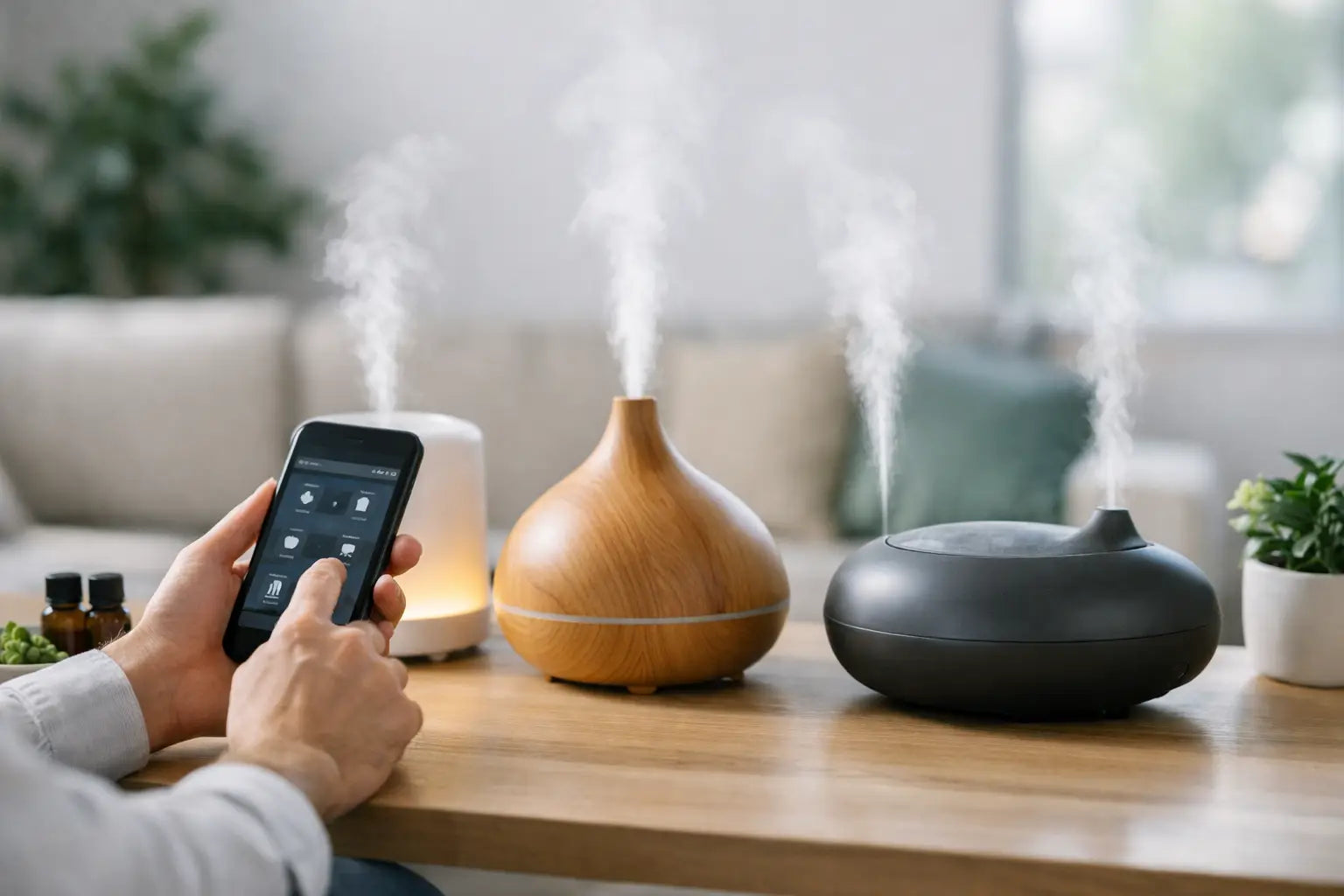
A living room with warm wood tones, a bedroom with the soft scent of linen, and an entryway that immediately feels inviting—that’s exactly why controlling multiple diffusers at once is so appealing. You’re not just creating a scent, but an atmosphere that’s just right for each space. And if you approach it smartly, that sense of control feels just as refined as the result.
Why controlling multiple diffusers at once is interesting
A single diffuser can transform a room. Multiple diffusers offer something else: cohesion. At home, that means a consistent scent experience without every room smelling exactly the same. In an office, salon, or boutique, it’s all about making a professional first impression that feels calm, clean, and well-thought-out.
However, it’s not just about placing more devices. As soon as you use multiple units, you have to consider range, intensity, timing, and scent selection. An open living space requires a different approach than a closed-off office. A living area has a different dynamic than a bedroom. That’s exactly where smart control makes the difference between “there’s a scent in the air” and an environment that truly feels balanced.
Controlling multiple diffusers at once starts with a good plan.
The best scent experience usually isn’t achieved by using the same setting everywhere. It starts with asking what a space is meant to achieve. Do you want tranquility, freshness, warmth, or perhaps a luxurious entryway experience? Once that’s clear, you can determine for each zone how much coverage is needed and how strong the scent should be.
In compact spaces, a subtle setting often works better. In larger spaces or open floor plans, you’re more likely to need multiple scent points to distribute the scent evenly. This prevents peaks and valleys—so you don’t end up with one corner that’s too intense and the rest with almost no scent at all.
When planning, three factors are key. The first is surface area. A diffuser that performs perfectly in a small space will simply be less effective in a large living room or retail space. The second factor is airflow. Air conditioning, ventilation, open doors, and high ceilings all influence how scent spreads. The third factor is the time of use. During the day, you often want a bright, inviting atmosphere. In the evening, you’ll prefer something softer and more enveloping.
Centralized or per room? It depends on your goal
. If you want to control multiple diffusers at once, you’ll usually end up with two approaches. You can manage everything centrally, or you can set up diffusers individually for each room. Neither is always better. It depends on how much control you want.
Centralized control is ideal if you’re looking for consistency. Think of an office, reception area, or home where you’d like to work with a single schedule. You set times, intensity, and sometimes even group functions, after which multiple diffusers respond in sync. That feels calm and efficient.
Individual control by room is actually more effective when each zone has its own function. The home office might call for a fresh, bright scent in the morning, while the bedroom is subtly activated later in the day. In retail, the entrance might be a bit more striking than the fitting room or waiting area. That level of nuance yields a richer result, but also requires a bit more attention during setup.
Here’s how controlling multiple diffusers simultaneously works in practice.
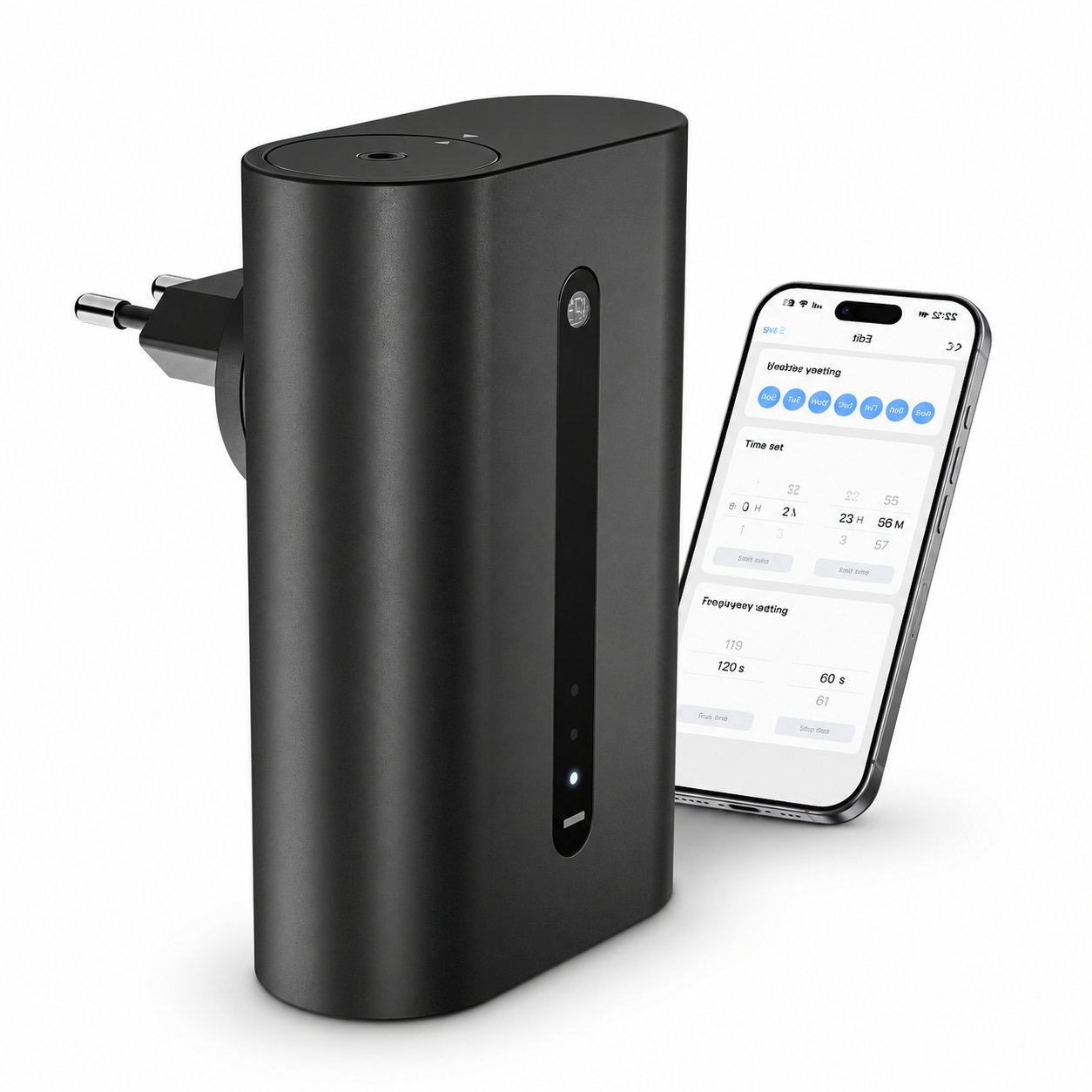
In practice, it usually starts with an app-controlled system with Wi-Fi functionality.. This . allows you to connect diffusers to the same network and manage them from a single interface. You can group devices, name them by room, and often set schedules based on times of day.
That sounds technical, but the effect is, above all, very practical. You no longer have to manually change settings on each device. You open the app, see which diffusers are active, and adjust the intensity or timing as needed. In a well-designed system, this feels almost second nature.
Here’s a smart tip: don’t start at maximum output right away. Especially if you’re activating multiple diffusers at the same time, the overall effect can build up faster than you expect. A scent that’s subtle in one room can feel more intense when combined with adjacent spaces. So start lower, live with it for a few days, and then fine-tune.
Controlling multiple diffusers at once without scent conflicts
A common mistake is thinking that more scents automatically mean more luxury. In reality, scent works like light and sound: harmony makes all the difference. Too many competing scent notes can feel overwhelming, even if each scent is lovely on its own.
The safest choice is to work within the same scent family or with a clear layered composition. A fresh entryway, a soft floral living space, and a warm, tranquil bedroom can blend beautifully when the transitions are just right. What doesn’t work quite as well is a very sweet scent right next to a sharp citrus or heavy woody note without any cohesion.
That’s why it pays to curate scents by zone rather than combine them randomly. A premium scent experience never feels overwhelming. It feels natural, layered, and well-balanced.
Which settings often work well for each space
In living areas, a consistent, moderate intensity often works best, especially when people spend extended periods of time there. In a hallway or entryway, the first impression can be slightly more pronounced, but still refined. Bedrooms usually call for a lower intensity and a shorter duration, so that the scent is noticeable without becoming overpowering.
Something similar applies to commercial spaces, but with a greater focus on foot traffic and presentation. A boutique or studio benefits from a consistent, subtle scent. A waiting area calls for a sense of calm. A larger retail or office environment, on the other hand, benefits from strategically placed diffusers that together create a single, soothing scent profile.
Common Mistakes When Operating Multiple Diffusers Simultaneously
The first mistake is using too much output in an area that’s too small. More capacity doesn’t automatically mean better results. A diffuser must be suited to the volume of the space; otherwise, the scent will be stronger than intended.
The second mistake is programming all devices exactly the same, regardless of location. An open kitchen, hallway, and bedroom react differently to temperature, ventilation, and usage. Identical settings therefore rarely result in an identical experience.
The third mistake is underestimating the maintenance required for the scent. Anyone using multiple diffusers must also keep track of refills, usage time, and performance. Especially in a premium setting, you don’t want one room to smell perfect while another comes to a standstill because a pod is empty.
When an HVAC solution is smarter
Sometimes, controlling multiple individual diffusers at the same time isn’t the most elegant approach. Especially in very large spaces or commercial environments with a lot of open floor space, an HVAC-based scent distribution system can make more sense. This allows you to use the existing air circulation system to distribute scent more widely and evenly.
This is particularly useful if you want to establish a single, consistent scent identity across a large area. For homes and small- to medium-sized commercial spaces, separate diffusers often offer greater flexibility. You gain more control per zone and can more easily vary the ambiance and intensity.
So the real answer isn’t always “bigger” or “smaller,” but rather “more appropriate.” A compact diffuser for a studio, a more powerful model for the living room, and perhaps a more robust solution for large commercial spaces: this is usually a more refined approach than using a single type of device everywhere.
How to create a luxurious scent experience with multiple diffusers
A successful setup doesn’t feel technical. It just feels right. You achieve this by first considering the flow: where do people enter, where do they linger, and where do you want tranquility or, conversely, a sense of freshness? From there, you build the scent the way an interior designer works with materials—layer by layer, with an eye for balance.
Start with one dominant atmosphere for the whole space. Then add nuances to each room, without losing sight of the main theme. This keeps your home or business feeling cohesive. That’s exactly what creates an impression of tranquility, quality, and care.
Those who opt for smart controls, quiet operation, and a diffuser that matches the scale of the room , will notice , just how big the difference is. With FUSIFY LX, it’s not just about scent diffusion—it’s about control, coverage, and a design that complements any interior.
What you really want to control is the atmosphere.
Controlling multiple diffusers at once may sound like a technical matter, but the real benefit lies elsewhere. You’re not just controlling devices. You determine how a scent enters a space, how long it lingers, and how people feel in that space.
When that’s finely tuned, you notice it immediately. The home feels calmer. A workspace looks more put-together. A store or studio gains a stronger presence without having to try any harder. More than just a scent. A feeling.