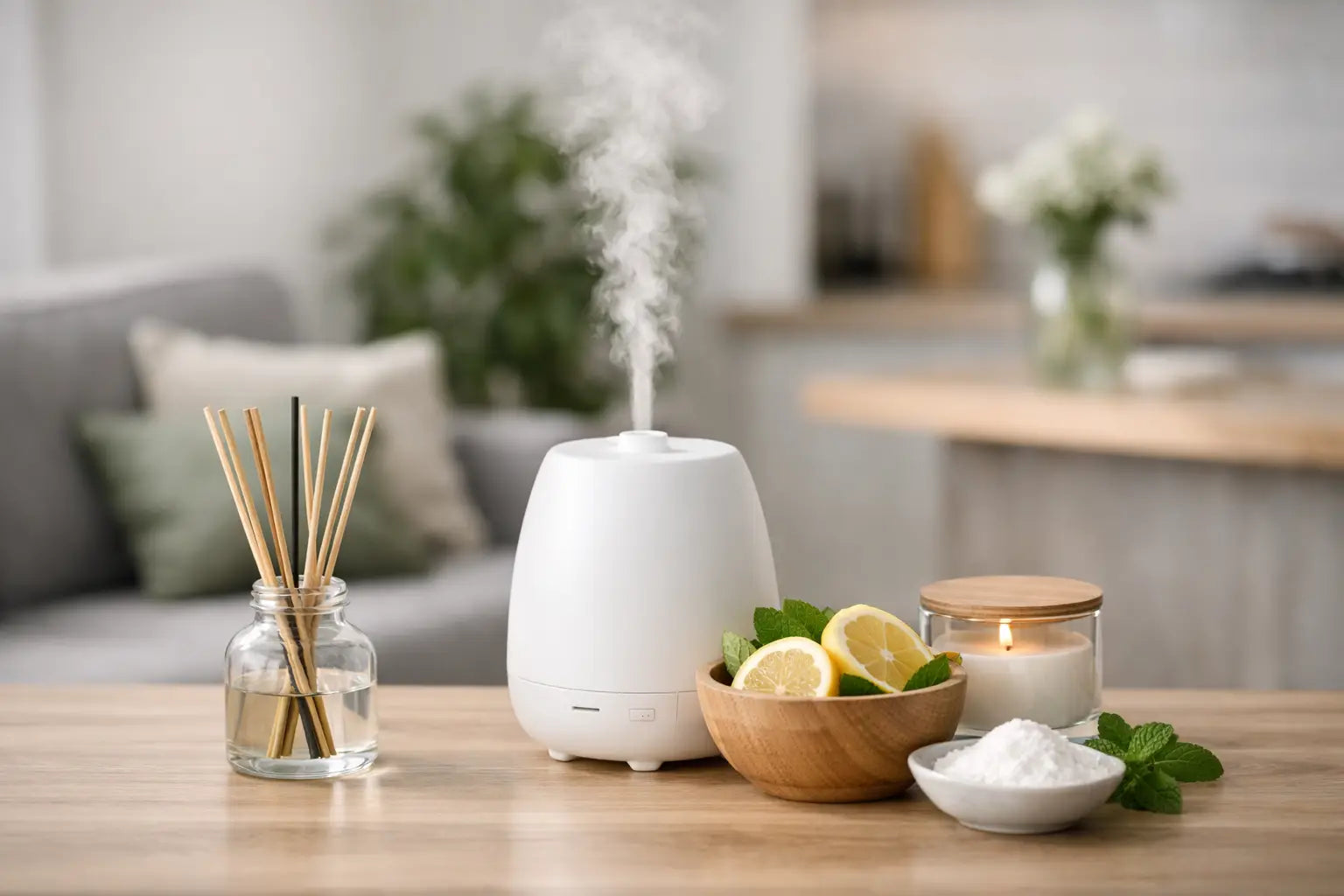
The smell of dinner can linger in an open kitchen for hours. Wet towels can quickly make a bathroom feel musty, while pets, shoes, or a full trash can can unexpectedly make an otherwise stylish interior feel less well-kept. Neutralizing unwanted odors at home therefore requires more than just a quick spray. Those who tackle the source of the odor and then consciously add a scent create a home that smells just as refined as it looks.
Neutralize first, then scent
A pleasant home fragrance works best on a clean, fresh base. A scented candle or room spray applied over cooking odors may temporarily mask them, but this often results in a heavy, cloying scent. Think of perfume sprayed on a wool coat that smells like fried food: the two scents compete rather than complement each other.
So always start with the source. When it comes to trash, it’s usually simple: empty the bin in a timely manner, clean the rim and lid as well, and let the inside dry thoroughly before placing a new bag inside. With textiles, it’s a bit more nuanced. Curtains, throws, pillows, rugs, and upholstered sofas slowly absorb odors. Regular washing, dry cleaning, or vacuuming is more effective than an air freshener that only treats the room.
Moisture also deserves attention. A musty odor is rarely just an odor problem. Check towels, shower mats, the washing machine, drains, and dark corners in the basement or closet. If there is visible mold, a leak, or a persistent moisture problem, ventilation alone isn’t enough. In that case, address the underlying cause first. Luxury isn’t about masking a problem, but about creating a space that truly feels well-cared-for.
Neutralizing Unwanted Odors at Home, Room by Room
Each room accumulates odors in its own way. A targeted approach prevents you from using the same, overly intense solution everywhere.
Kitchen: grease, food waste, and strong ingredients.
In the kitchen, speed is important. Turn on the range hood during and after cooking, and—weather permitting—open a window on the opposite side of the room. This airflow carries cooking fumes away instead of spreading them throughout the home. Don’t leave pans with fish, garlic, or herb residue sitting for longer than necessary, and clean the range hood filter according to the instructions.
An open-concept kitchen requires extra balance. After cleaning, don’t immediately opt for a very sweet or heavy scent, as it can mix with lingering odors. A fresh, clean scent blend usually feels more soothing here and makes the space smell well-kept without overpowering the cooking.
Bathroom: Moisture Calls for Routine
A bathroom smells fresh because of routine, not because of the amount of fragrance used. Hang towels out to air, wash bath mats regularly, and dry wet surfaces whenever possible after use. Let the fan run long enough or open a window. This makes a noticeable difference, especially in apartments without much natural ventilation.
Also check the drain. Hair, soap scum, and standing water can cause an unpleasant odor that keeps coming back. Clean the drain carefully and choose a method that’s suitable for your pipes and local regulations. Only when the room is dry and clean does a subtle scent truly come into its own—as if you’re stepping into a boutique hotel, but at home.
Living room and bedroom: textiles hold onto memories
In living spaces, scents are often less immediate but more persistent. Pets, shoes, candle smoke, and cooking odors cling to soft materials. Vacuum not only the floor, but also sofas, armchairs, and rugs. Air out your bedding and wash pillowcases regularly, especially if pets are allowed on the bed or couch.
In the bedroom, the rule is: softer is better. A scent that’s too strong can interfere with relaxation, while a light, steady diffusion actually gives the room a calm and well-kept feel. If you’re sensitive to scents, start at the lowest setting and increase it only if the room calls for it.
Ventilation is the quiet foundation of a fresh home
. Scents need space to circulate. Without ventilation, vapors, moisture, and fine particles continue to circulate within the same room, even when the space looks tidy. Brief, targeted daily airing is often more effective than leaving a window ajar for hours. Ideally, open two windows or doors opposite each other for a few minutes to ensure a genuine air exchange.
In a home with air conditioning or central heating,
maintenance is just as important. Replace filters on time and keep vents clear. A system that circulates dust and stale odors dulls any scent experience. If you notice a recurring, unexplained odor coming from ventilation ducts, it’s wise to have a professional inspect the system.
Ventilation does have its limits. In very hot, humid, or cold weather, you don’t want to bring in an endless stream of outside air. In such cases, a consistent cleaning routine, supplemented by an appropriate air purifier or dehumidifier, helps keep the indoor air comfortable. Which option works best depends on the cause, the size of the space, and the climate where you live.
Choose scent as a finishing touch, not as a cover-up.
When the basics are right, scent becomes part of your interior design. Just like lighting, materials, and music, it determines how a space feels. An entryway can feel inviting and bright. A home office can smell fresh and focused. The living room can be warmer and more layered, as long as the scent doesn’t overpower everything.
An electric diffuser offers more control than a standalone spray or a burning candle. You choose the intensity, schedule usage times around your daily routine, and prevent a scent from becoming unnecessarily strong when no one is home. For design-conscious homes, that’s a practical advantage: ambiance without visual clutter, smoke, or an open flame.
Pay special attention to the capacity. A compact unit may be ideal for a bathroom, bedroom, or home office, but it will get lost in a large living room with high ceilings. A device that’s too large for the room can actually make the scent too overpowering. Therefore, don’t just measure the square meters; also consider ceiling height, open passageways, and air circulation.
FUSIFY LX combines this controlled diffusion with an elegant, smart design, so that scent isn’t a standalone solution but an integral part of how your space feels. With an adjustable rhythm, you can fine-tune the experience: present when it counts, subtle when tranquility is desired.
Avoid these common scent mistakes
More scent isn’t automatically better. The most compelling spaces don’t smell as if a product has just been used. They simply feel fresh, warm, or calm. That difference comes down to dosage.
Also, avoid constantly switching between strong scents. If you introduce a different, distinct scent every week, a space won’t develop a recognizable character. Instead, choose a scent profile that complements your interior and use a second, lighter variant for spaces like the bathroom or bedroom. This keeps the overall atmosphere refined without everything smelling exactly the same.
Finally: never use scent as a substitute for cleaning. A scent diffuser is a powerful way to set the mood, but it’s no solution for a forgotten trash can, damp laundry, or a drain that needs attention. It’s precisely that combination of care and ambiance that makes all the difference.
A home that smells good doesn’t have to be heavily perfumed. Clean up the source, let the air circulate, and then choose a scent that suits the moment. Then coming home becomes not just something you see, but something you feel right away.