Does an aroma diffuser use a lot of electricity? For most modern aroma diffusers, the answer is reassuring: no. An aroma diffuser typically uses only a small amount of electricity, especially compared to appliances that generate heat, such as a dryer, air conditioner, or electric heater. So you can create a refined, inviting atmosphere for hours on end without noticeably affecting your energy bill.
That doesn’t mean every model uses the same amount of power. Power consumption depends on the technology, the size of the room, the selected intensity, and how you set up the device. When you choose smart fragrance diffusion, you’re not only choosing a beautiful interior and a scent that lingers, but also control.
How much power does a fragrance diffuser use?
The power consumption of a fragrance diffuser is measured in watts. The lower the number, the less energy the device uses per hour. Compact diffusers for a bedroom, hallway, or home office typically operate at about 2 to 5 watts. A more powerful model for a large living room, boutique, or reception area is more likely to use between 5 and 15 watts. Larger professional systems can exceed that, depending on coverage and built-in features.
For comparison: a 5-watt device running eight hours a day consumes about 1.2 kWh per month. At an electricity rate of 20 cents per kWh, that costs about 24 cents per month. Even a 10-watt diffuser that runs for long periods every day usually remains a modest expense on your energy bill.
The calculation is simple: power in watts multiplied by the number of hours of use, divided by 1,000, equals consumption in kWh. Then multiply that by your local electricity rate. That way, you’ll know exactly where you stand, without having to guess.
Not every diffuser works the same way
. A fragrance machine that disperses scent via cold misting uses energy for the pump, ventilation, or misting mechanism. This is different from a fragrance burner or fragrance warmer, which requires heat to release the scent. Devices with a heating element typically consume more power.
An ultrasonic diffuser with a water reservoir also has a different energy consumption profile. In this case, energy is used not only for scent diffusion but also for creating a fine mist. For a luxurious, consistent scent experience in larger spaces, waterless systems with scent pods or fragrance oil are often more practical: no damp mist, no open flame, and more controllable scent intensity.
What determines whether a scent machine uses a lot of electricity?
The power rating on the label tells part of the story. Your daily usage determines the final cost. A powerful air freshener that runs for just a few moments each day can be more energy-efficient than a smaller model that’s constantly set to the highest setting.
Room size is a key factor here. In a small bedroom, a large unit set to maximum intensity offers little added value. It may consume energy unnecessarily, and the scent can become too overpowering. Conversely, a model that’s too small in an open living space will have to work harder to produce noticeable results. The right coverage ensures an elegant presence of scent, not an excess of it.
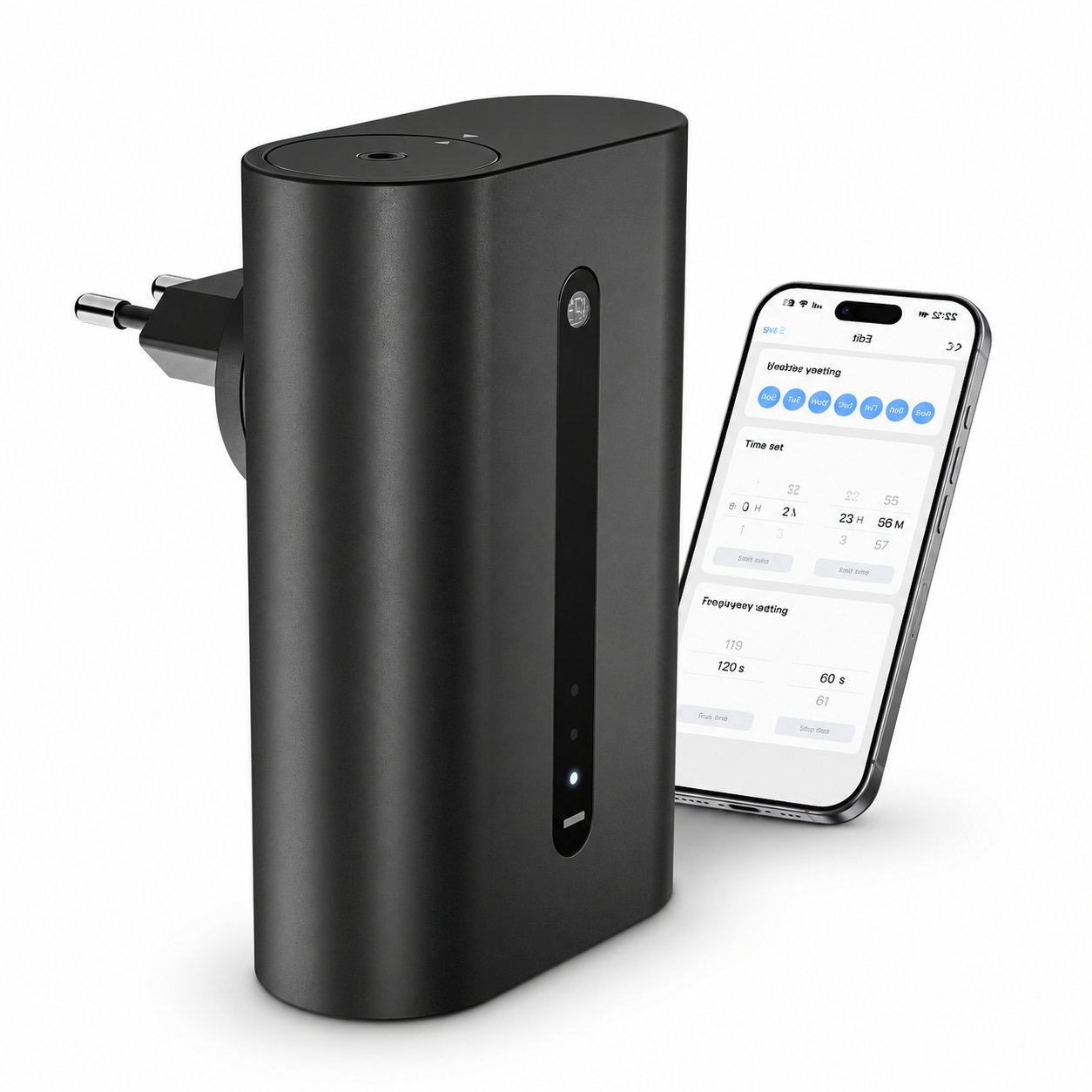
Smart features can also make a difference. Wi-Fi control uses a small amount of standby power but allows for more targeted use. For example, with a schedule, you can turn on the scent diffuser before you get home, during your store’s business hours, or during the hours when your office is actually occupied. That precision is often more valuable than a device that remains unnecessarily active all day long.
Does a scent diffuser consume a lot of power during continuous use?
Continuous use sounds intensive, but with an energy-efficient device, power consumption is often minimal. Still, running it constantly is rarely the best way to scent a room. Scent is all about the experience: a subtle first impression upon entering, a familiar atmosphere in the living room, a refined sense of calm in the bedroom. If your nose is constantly exposed to the same scent, you’ll get used to it. You’ll then keep turning the device up higher and higher, even though that isn’t necessary.
Instead, opt for intervals. Think of short bursts of fragrance alternated with periods of rest. This keeps the scent fresh and noticeable, reduces the machine’s power consumption, and makes your scent pod or refill last longer. Especially in spaces where doors are often left open or where many people come and go, a customized schedule is more effective than keeping the system at a permanently high setting.
With FUSIFY LX, app-based control makes it easier to find that balance. You can adjust the intensity to match the rhythm of your day, from a quiet morning at home to a warm welcome for guests or customers.
This way, you keep energy consumption low and the atmosphere lively
. A low energy bill never has to come at the expense of ambiance. In fact, a well-thought-out setting gives the scent more character. Keep these practical tips in mind:
- Choose a scent diffuser that’s appropriate for the size of your space. Bigger isn’t necessarily better.
- Use the lowest setting at which the scent is still pleasantly noticeable in the room.
- Set up schedules for times when you’re at home, at the office, or open for customers.
- Place the device in an open area, not behind a sofa, curtain, or large plant. This allows the scent to disperse more effectively.
- Keep the diffuser clean and replace the fragrance refills on time to ensure it continues to operate evenly.
Power consumption is not the same as scent consumption
A common mistake is confusing electricity consumption with scent cartridge consumption. A device may use little power, but it can consume a scent pod more quickly when the intensity is set high or when the room is large and heavily frequented. Conversely, an efficient, well-placed scent diffuser can be economical in terms of both energy and scent.
That’s why it makes sense to look beyond just wattage. Also consider the coverage area , , the adjustable settings, the ability to use schedules, and how long a fragrance refill lasts under normal use. That combination determines your costs and, more importantly, how consistently your space feels.
For a small apartment, a compact plug-in solution can be perfect. In an open living space with high ceilings, a more powerful model is often a better choice, provided you set it to a low setting. For a store, salon, or office, coverage by zone is often more important than making a single device work harder and harder. So there’s no one-size-fits-all wattage that’s ideal for everyone.
When should you be extra careful?
Always check the specified power rating and the user instructions for the specific model.A fragrance diffuser with built-in lighting, a display, a battery-charging function, or a heating function may have different power consumption than a simple, waterless device. Do you have a rechargeable diffuser? If so, its power consumption also depends on how often you recharge it and how long the battery lasts.
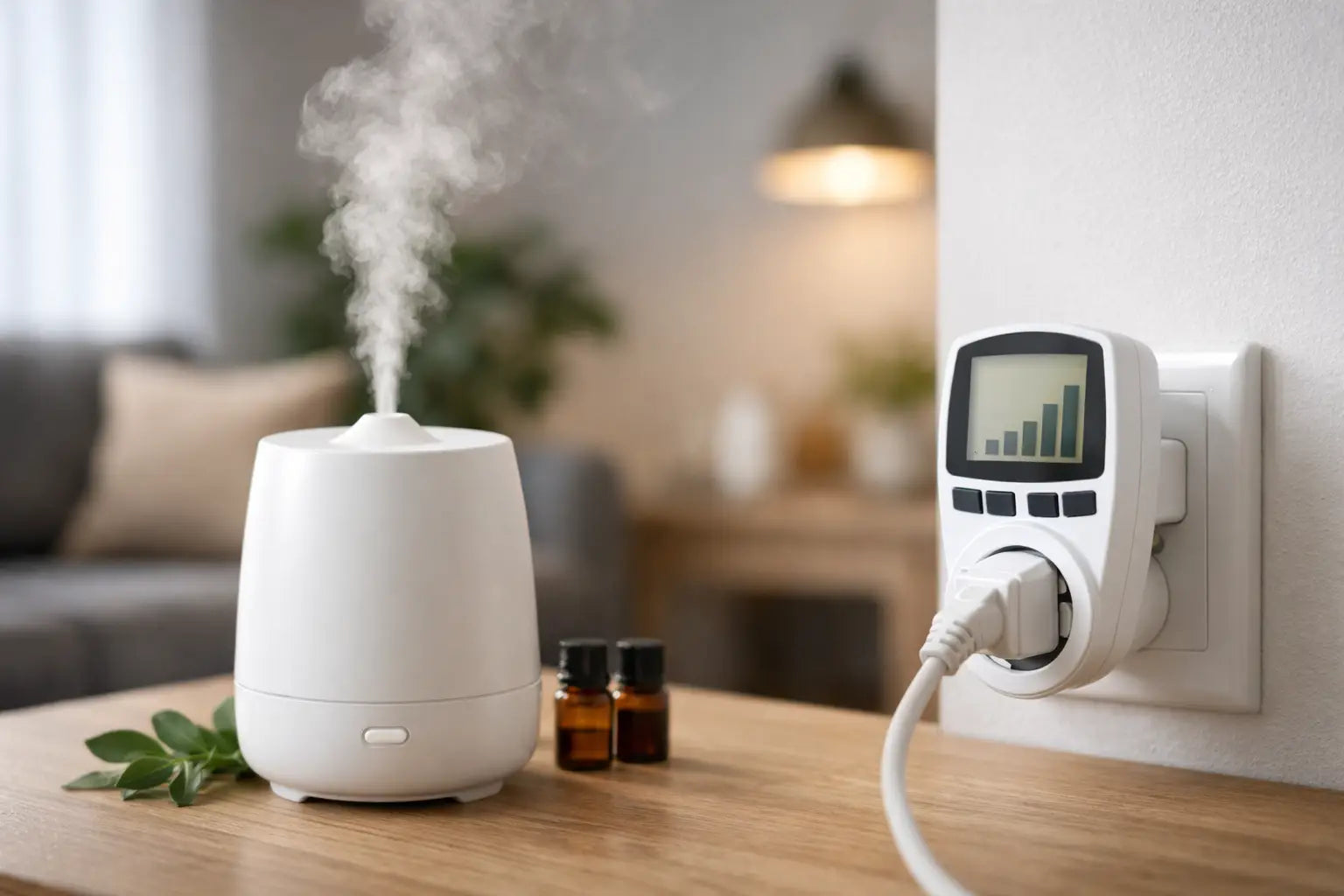
If you really want to keep track of every detail, you can plug an energy meter between the outlet and the plug. This provides insight into actual energy consumption, including standby use. For most households, this isn’t necessary, but it can offer peace of mind if you use multiple devices at home or in a commercial space.
A scent diffuser doesn’t have to be a hidden energy guzzler. Choose the right size, let the scent speak at the right moments, and fine-tune the intensity. Then electricity becomes just a small detail in a space that feels welcoming, looks well-kept, and leaves a lasting, pleasant impression.