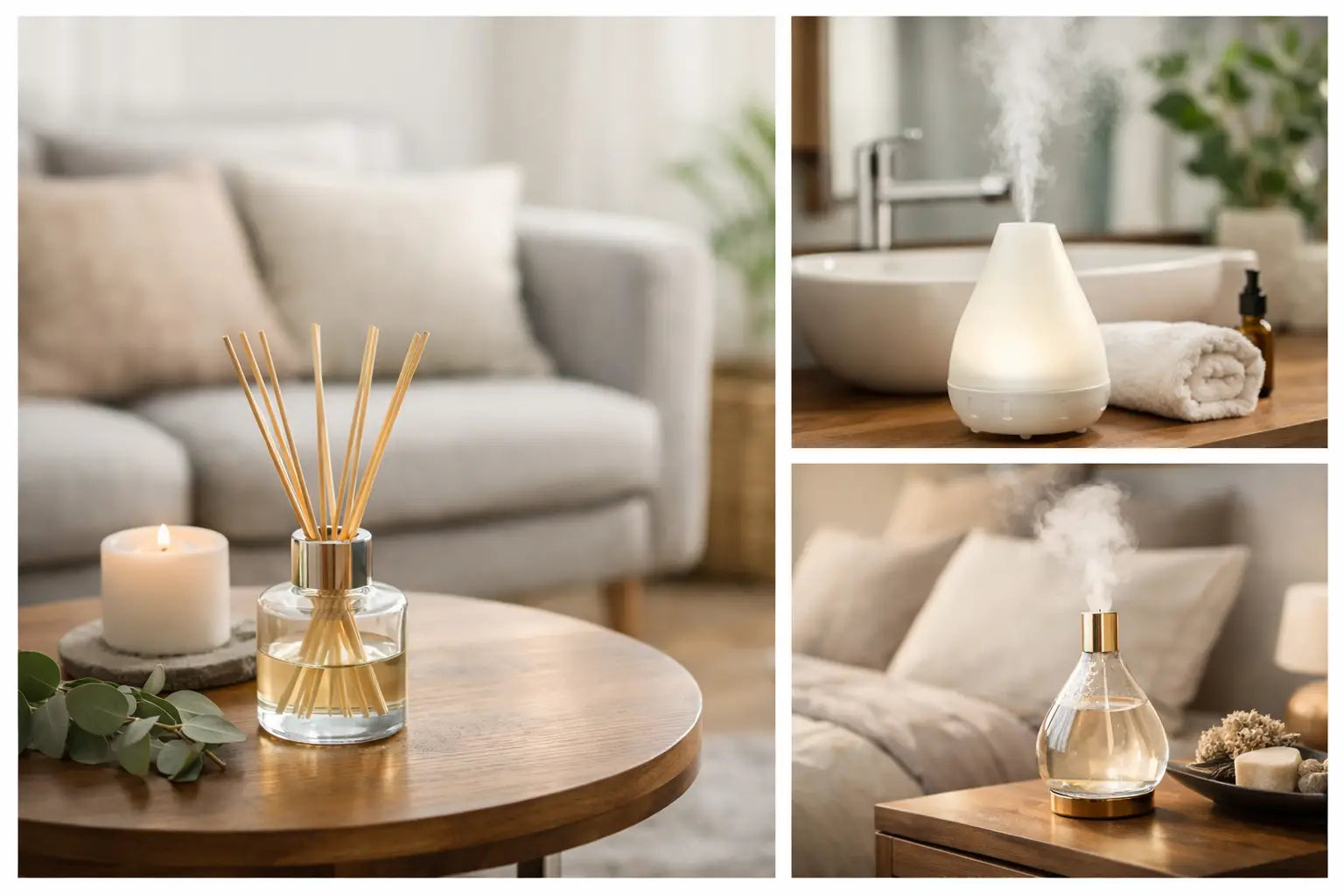
A scent that feels just right in the bedroom can get lost in an open-concept living room. And what makes an entryway feel warm and inviting can quickly become overpowering in a small bathroom. With this guide to scent diffusion by room, you won’t create a cloud of scent, but rather a refined atmosphere that suits the scale, function, and character of each space.
Scent is more than just a final touch after tidying up. It’s the first subtle signal that a space feels well-kept, soothing, or—on the contrary—energetic. The right scent diffusion makes an interior more memorable without overwhelming the space.
Guide to Scent Diffusion by Room: Start with the Space
. The square footage is a good starting point, but it’s not the whole story. Ceiling height, open passageways, ventilation, textiles, and daily use all determine how scent moves. For example, a compact room with lots of upholstered furniture retains scent longer than a minimalist space with hard floors and large windows.
So don’t just look at square meters; consider the actual air volume and airflow. A diffuser designed for a closed-off bedroom doesn’t need to be as powerful as a model for a living room that opens into the kitchen. In an open-concept layout, you often treat the connected areas as a single, larger space.
Placement also matters. Don’t place a diffuser right next to an open window, ventilation grille, or air conditioner. The scent will dissipate faster than you’d like. A central location, slightly out of the way and on a stable surface, usually yields a more even result. In larger spaces, placing the diffuser near a natural airflow path often works better than placing it all the way in a corner.
Entrance and foyer: a refined welcome
The entrance sets the tone even before anyone has taken off their coat. Here, the scent should be immediately noticeable, but not overpowering. Choose a clean, elegant blend featuring fresh citrus, soft wood, white tea, or a light musk. These fragrance families create a polished and welcoming atmosphere, even when guests have just come in from outside.
Because entryways are often compact, a low- to medium-intensity scent is usually sufficient. It’s better to let the diffuser run regularly and gently rather than briefly on a high setting. This way, the scent remains subtly present when the door opens, without overwhelming the small space.
Does your entryway open directly into the living room? If so, coordinate the scents in both areas. A fresh scent in the entryway can blend beautifully with a warmer, woody scent in the living area, as long as the scent notes don’t clash.
Living Room: A Scent That Combines Presence and Calm
The living room calls for a scent that lingers without being overpowering. This is the space for long evenings, guests, relaxation, and daily rituals. Warm woody notes, amber, cashmere, fig, tonka, or a refined floral scent add depth and a sense of comfort.
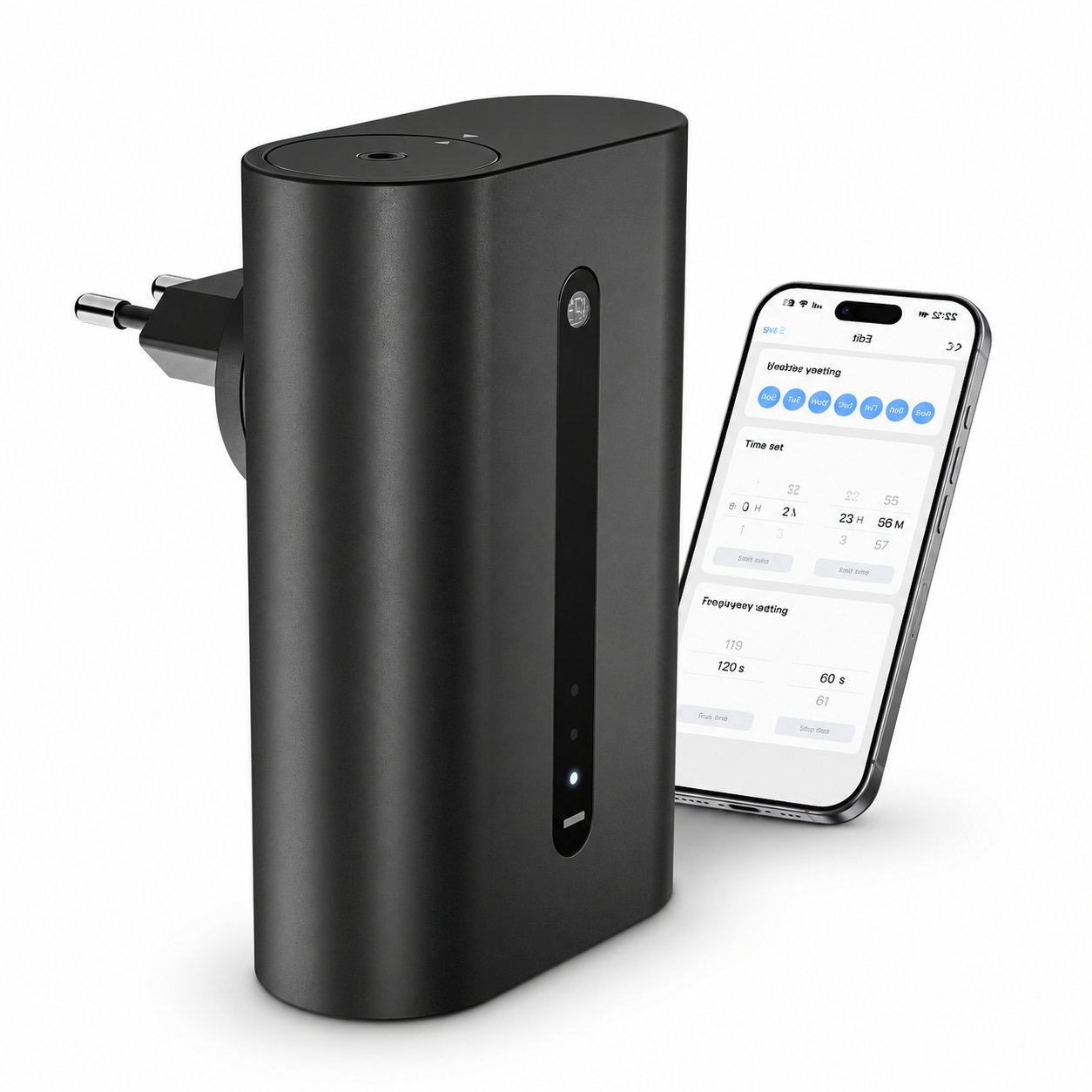
In an average living room , a diffuser with adjustable intensity works best. During the day, you can keep it on a lower setting for a light, continuous ambiance. For dinner, a visit, or a quiet weekend moment, temporarily increase the diffusion. Smart controls let you feel that difference without having to constantly think about it.
Be especially mindful in an open kitchen. Cooking odors don’t necessarily require a much stronger diffuser, but they do call for thoughtful timing. Let the scent build up again after cooking rather than running the diffuser at maximum power while you’re cooking. That way, a luxurious aroma won’t unnecessarily mix with garlic, spices, or fried foods.
Kitchen and dining area: fresh, crisp, and subtle
The kitchen is a place where scent must serve a functional purpose. Here, you want to maintain a fresh atmosphere without interfering with the taste of the food. Therefore, opt for light citrus, green tea, subtle herbs, bergamot, or a clean linen scent. Heavy, sweet scents, intense leather, and bold florals can clash more easily around mealtimes.
Set the diffuser to a lower setting while cooking and higher once the kitchen has been tidied up. In a dining area adjacent to the kitchen, the scent can be slightly warmer, such as soft woody notes or a mild amber base. The difference lies in nuance: the table should be inviting, not smell like perfume.
A good rule of thumb is that the scent in the kitchen should be noticeable mainly when you enter or return, not with every breath. If you can still smell the scent very strongly after a few minutes, reduce the intensity or shorten the program.
Bedroom: personal, soft, and subtle
A bedroom doesn’t need a strong scent to feel luxurious. This is exactly where a low, steady diffusion works best. Think of lavender with a modern twist, clean cotton, soft sandalwood, cashmere, iris, or a subtle musk. These scents enhance the feeling of well-kept bedding and bring more tranquility to your evening routine.
In a small bedroom, avoid using a high setting right before bedtime. The scent experience is personal and can feel more intense when the door is closed. Instead, program the diffuser to start an hour before your bedtime and then have it run at a lower setting or turn off automatically.
In a master bedroom with a walk-in closet, scent can also help create a more seamless transition between sleeping and getting dressed. In that case, choose a single scent profile for both areas. Two distinct aromas right next to each other make the space feel less calm.
Bathroom: A clean feeling without harsh notes
The bathroom calls for freshness, but not a scent reminiscent of a standard air freshener. Eucalyptus, white tea, soft citrus, green notes, and a light, spa-like musk work particularly well here. They enhance the feeling of clean towels, a warm shower, and a tidy sink.
Bathrooms are often small and humid. Therefore, use a compact model or a low setting, especially if there’s little ventilation. Keep the diffuser away from direct water splashes and place it where air can still circulate. A light scent that refines the space after use is more effective than a strong scent that tries to mask moisture and body odor.
Home Office: Clear Thinking, Professional Hospitality
In a home office, scent should support without distracting. Fresh wood notes, citrus, green tea, light herbs, or a subtle earthy base can make a space feel brighter and more professional. Especially during video calls and client visits, that polished atmosphere contributes to how you experience your workday.
Opt for an even, subtle diffusion during office hours. A scent that is too sweet or too heavy can become overwhelming after a long workday. If you work in a small, enclosed room, the lowest setting is often sufficient. In an office with multiple workstations, a wider coverage area is needed, but restraint remains essential: scent preferences vary from person to person.
Large open spaces and commercial environments
A lobby, boutique, salon, showroom, or spacious living area requires more than just a higher setting. Here, consistent coverage is key. An undersized diffuser works hard without reaching the entire space, while a system that’s too large in a compact space disrupts the balance.
Measure the space, look at the ceiling, and take into account open doors, drafts, and foot traffic. For large areas, models with greater capacity and careful planning are a better starting point. In very large commercial spaces, an HVAC solution covering up to 2,000 m² may be appropriate, provided it is professionally tailored to the building’s airflow.
FUSIFY LX offers various diffuser sizes, ensuring that a peaceful bedroom, a stylish retail space, and a spacious living area can each enjoy a tailored scent experience. The best choice doesn’t feel like technology on display, but rather like a space that naturally exudes more sophistication.
Adjusting intensity: less is often more luxurious
Always start at a lower setting than you think you’ll need. Give a new setting at least a few hours—and ideally a full day—before making any further adjustments. Your nose quickly gets used to a scent, while visitors can still clearly smell it. Therefore, it’s better to ask someone who’s just walked in for an honest impression rather than immediately increasing the intensity.
Also, adjust the rhythm to the time of day. A gentle morning setting, a subtle presence in the afternoon, and a warmer intensity when you’re entertaining guests give you more control than a single, constant high setting. With an app-controlled diffuser, you can preset those moments, ensuring the right atmosphere is there when you want to experience it.
A scent is at its best when it doesn’t overwhelm a space, but rather complements it. Choose an aroma for each room that suits the activities taking place there, give it time to diffuse gently, and let the interior design have the final say.