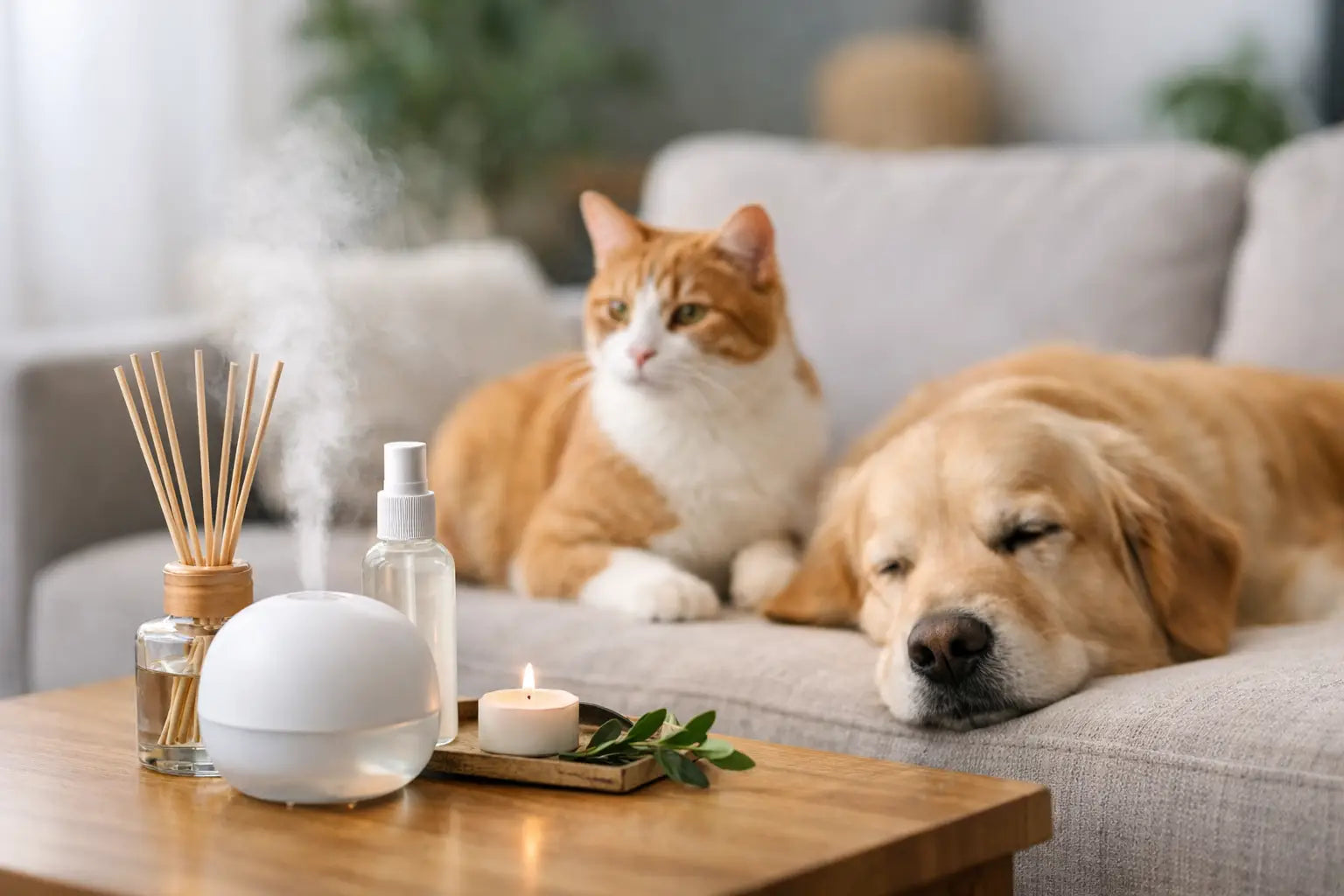
A wet dog coat by the front door, a cat bed in the sun, or a favorite spot on the couch: pets make a home warm and lively, but they can sometimes leave behind a trail of odors. The right home fragrance for pet odors does more than just mask the smell with a layer of perfume. It restores the space to a fresh, well-kept atmosphere that complements your interior.
A home that smells like a pet isn’t necessarily unhygienic. It’s often a matter of fabrics, air circulation, and spots where odors slowly build up. If you tackle this wisely, you don’t have to choose between a subtly scented home and the company of a dog or cat. It’s all about a subtle, consistent scent experience, tailored to the space and the animals that live there.
Why pet odors linger in the home
Odors tend to cling to porous materials. Think of rugs, throws, curtains, upholstered sofas, and your pet’s bed. Moisture can intensify a cat’s natural scent, especially after a walk in the rain. For cats, litter and the area around the litter box can play a role, even if you clean it daily.
Airflow also makes a big difference. A scent that’s barely noticeable in a small entryway can spread throughout the entire house via an open living room, staircase, or ventilation system. A single spray will, at best, provide only a brief burst of freshness. As soon as that fades, the underlying odor returns.
That’s exactly why a thoughtful approach works better than simply adding more and more scent. First, clean away what’s trapping the odor, and then let a high-quality diffuser gradually refine the scent in the room. Not harsh, not sweet, not overwhelming. Just the feeling that everything is just right the moment you walk in.
Home Fragrance vs. Pet Odor: Neutralize First, Then Refine
A luxurious fragrance experience starts with a clean base. Wash basket liners, blankets, and throws regularly according to the care label. Vacuum sofas and rugs thoroughly, including under cushions and furniture. Don’t forget spots where pets often lie: the windowsill, the car, the entryway mat, and their favorite corner of the couch.
If an odor remains noticeably strong or changes suddenly, investigate the cause. An accident on fabric, a towel that didn’t dry properly, a full litter box, or a coat issue requires a targeted solution. If there’s a persistent, unusual body odor, it’s wise to consult a veterinarian. A scent may enhance a space, but it shouldn’t mask a signal that requires attention.
Only once the source is under control can home fragrance truly shine. A diffuser provides even distribution that gives the room a refined signature, without the sharpness of a room spray or the smoke from a candle. That difference may seem subtle, but it changes the entire experience of a space.
Choose a scent that feels fresh, not heavy
. When dealing with pet odors, it’s tempting to reach for extremely sweet, spicy, or very heavy fragrances. But that can backfire. A scent that’s too overpowering mixes with existing odors, making the result feel even heavier and more overwhelming.
Instead, opt for a crisp scent profile with airiness and depth. Fresh linen, light citrus, green notes, soft woody notes, or an elegant, clean musky base can make an interior smell well-kept without feeling clinical. In a living room, the scent can be warmer and more layered. For a entryway, utility room, or area around the litter box, a cleaner, fresher profile often works better.
The intensity is just as important as the scent itself. You want visitors to think upon entering, “It smells so nice in here,” not, “What is that smell?” Luxury lies in the balance. A scent that lingers subtly feels more lasting and refined than a powerful cloud that takes over the space.
Tailor the scent to the room.
A small space calls for restraint. Place a compact diffuser in a hallway, bedroom, or home office and start on the lowest setting. In an open living area, the scent can be more pronounced, but even there, gradual diffusion is usually more pleasant than maximum intensity.
In a multi-story home, it can be pleasant to choose a distinct atmosphere for each zone. Keep the base notes related, though: a light, fresh entryway and a warmer living room together form a cohesive whole. This way, the home feels curated rather than simply perfumed.
For larger living spaces, boutiques, or workspaces, coverage is essential. A diffuser that’s too small for the space has to work too hard and disperses the scent less evenly. A system that’s sized appropriately for the square meters of space actually provides a constant, subtle scent layer. With FUSIFY LX, app-based control also makes it easier to tailor the intensity and timing of scent diffusion to your schedule.
Placement Makes All the Difference
Don’t place a diffuser right next to the litter box, cat litter tray, or food bowl. That’s where the scent source is most concentrated, and the result can be too overpowering. Instead, choose a spot where air can circulate freely, such as on a stable piece of furniture in the living room, near the passageway between the entryway and living area, or inside an open cabinet.
Avoid direct heat, bright sunlight, and places where a diffuser could easily tip over. A quiet, slightly elevated position often works well: the scent has room to spread without lingering in one spot. Don’t keep windows closed all the time. Regular ventilation remains one of the simplest ways to keep a home fresh.
Anyone who works from home knows the difference that scent can make. A well-maintained office feels calmer, more focused, and more polished. Opt for a lower setting there than in the living room, especially if you spend many hours in the same space. Scent should be supportive, not distracting.
Be mindful of your pet.
Dogs and cats have a much keener sense of smell than humans. A scent that’s barely noticeable to you may be very distinct to them. Therefore, always start with a low setting and observe how your pet reacts. Make sure your pet can leave the room, and never place a diffuser in a small, enclosed room where the animal has no choice but to stay.
Extra caution is advised with birds, small rodents, reptiles, older animals, and pets with respiratory issues. Their sensitivity may vary. Use fragrance solutions strictly according to the manufacturer’s instructions, avoid direct contact with the liquid or refills, and keep pods out of reach of pets and children.
Also pay attention to behavior. Sneezing, restlessness, withdrawal, or avoiding a room may indicate that the setting is too high or that the location is unpleasant. Turn down the intensity, ventilate the room, and choose a different spot. An elegant interior is only truly comfortable when everyone feels relaxed in it.
Make freshness a regular ritual
The most inviting homes don’t just smell good right after cleaning. They feel well-cared-for every day. So combine your diffuser with a simple routine: wash fabrics, remove pet hair, clean the litter boxes, air out the space, and set an appropriate scent intensity at regular intervals.
That ritual doesn’t have to take much time. It is precisely this consistent, subtle attention that prevents scents from building up and saves you from having to compensate later with a solution that’s far too strong. The result is a home where the couch invites you in, the entryway instills confidence, and the living room exudes a quiet sense of luxury.
Your pet is part of your home’s story. With the right care and a subtle scent in the background, that story remains warm, personal, and wonderfully welcoming.