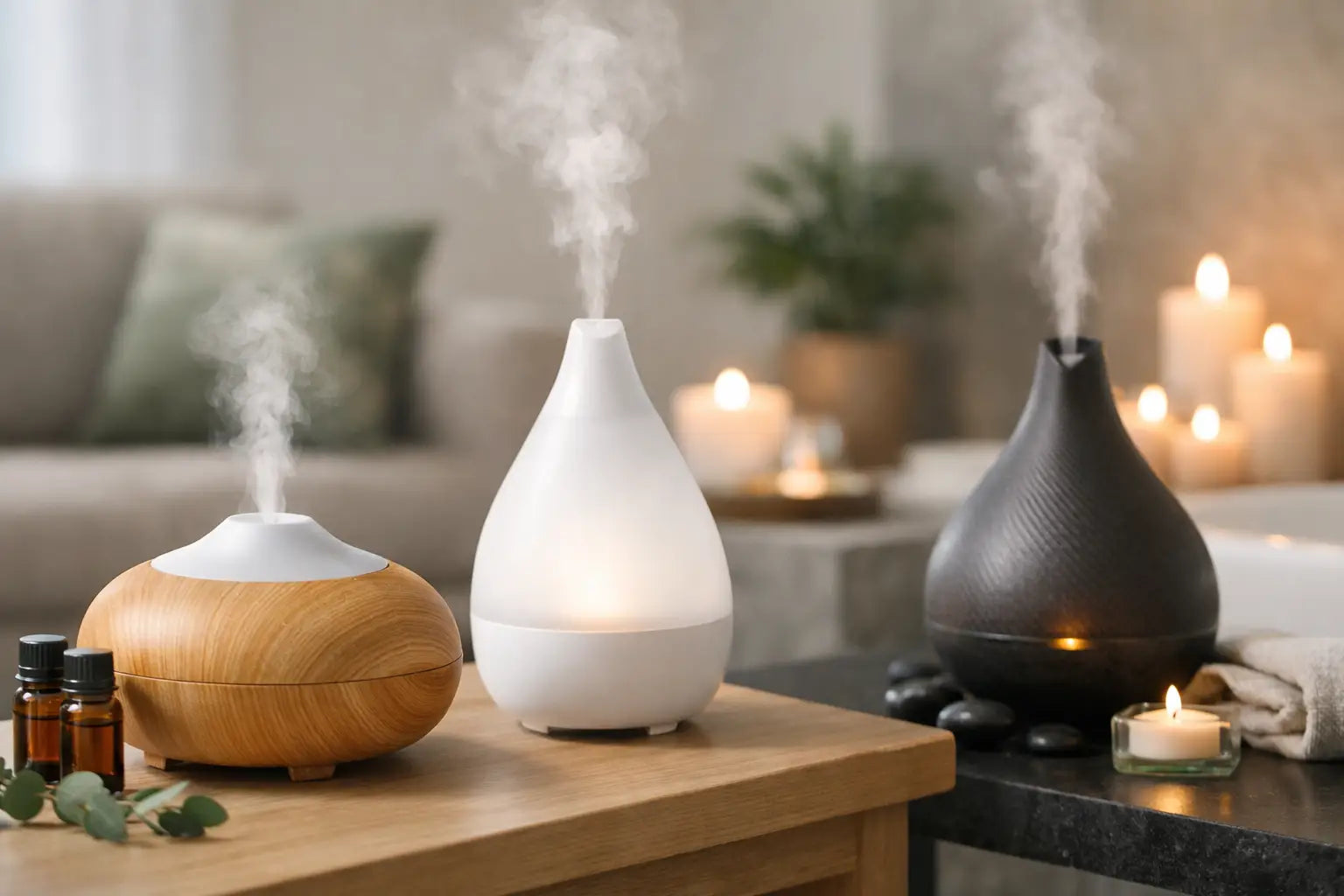
A hallway that smells like fresh linens, a living room with the soothing warmth of wood and amber, or a boutique where customers feel that everything is just right the moment they walk in: scent sets the first impression. But which diffuser is right for your space? The answer isn’t just a matter of square meters. The layout, ceiling height, airflow, and desired intensity all work together to determine whether the scent is subtly present or becomes too overpowering.
A premium diffuser works best when it’s tailored to the space, not when it’s set to maximum output. This way, the scent lingers subtly in the background—exactly what a luxurious interior experience calls for.
Start with the floor area, but don’t stop there.
The specified coverage of a diffuser is a valuable starting point. So, first measure the floor area of the room where you want to diffuse the scent. In the United States, measurements are often given in square feet, while diffuser capacity is usually listed in m². One m² is approximately 10.8 square feet. A 215-square-foot room is therefore about 20 m².
Don’t view this capacity as a strict limit, but rather as a comfortable guideline. A diffuser designed for 50 m² will generally perform quietly and evenly in a closed room of 45 m². If you place the same model in an open living area with high ceilings, an open kitchen, and constant foot traffic, that same space will require more capacity.
It’s best not to blindly choose the largest diffuser. Too much capacity in a compact room can make a scent heavier than intended, especially with distinct notes such as leather, oud, spices, or dark woods. A smaller, adjustable diffuser will yield a more elegant result.
Which diffuser is best suited to the room and ceiling height?
Square meters tell only part of the story. Scent spreads through air volume. A 20 m² bedroom with a standard ceiling requires a very different approach than a 20 m² loft with a ceiling over three meters high. In that loft, the scent dissipates more quickly, so a diffuser with a greater range or a higher setting often makes more sense.
High ceilings, open-concept homes, and reception areas require patience. Don’t set the diffuser to the highest setting right away. Start at a medium intensity and give the scent a day to settle. The scent experience changes depending on temperature, ventilation, and the time of day.
The shape of the room also matters. A long, narrow hallway disperses scent differently than a square room. In an L-shaped living room, a single diffuser won’t naturally reach every corner. In that case, place it in a central location where air can circulate freely, or opt for two smaller scent points instead of one powerful system at the far end of the room.
The Right Choice for Every Type of Room:
Bedroom, Bathroom, and Home Office
. Small, enclosed spaces call for a subtle approach. A compact plug-in model or a small wireless diffuser is often the right choice here. You want a constant, light layer of scent, not a cloud of fragrance that lingers while you sleep or work intently.
For a bedroom , a low setting works best, especially if the diffuser has a timer or app control. Choose a scent that complements the room’s atmosphere: soft musk, fresh cotton, soothing floral notes, or a refined woody accent. In a bathroom, the intensity can be slightly higher, especially if you want to neutralize unwanted odors without resorting to a harsh spray.
A home office should smell fresh and well-kept, but never be distracting. Citrus, tea, light cedar, or a clean-laundry scent give the space a professional, serene atmosphere. Ideally, the diffuser shouldn’t be placed right next to your desk, but at a slight distance so that the scent naturally spreads throughout the room.
Living Room, Open Kitchen, and Entryway
The living room is often the heart of the home and usually the most challenging space to scent effectively. Open layouts, cooking, sliding doors, and a lot of foot traffic cause scents to dissipate more quickly. Here, choose a diffuser that suits the entire open living area, not just the seating area.
In an open kitchen, placement is more important than extra scent intensity. Don’t place the diffuser right next to the stove, the range hood, or an open window. Those spots disrupt the diffusion or allow the scent to escape too quickly. A sideboard, wall unit, or console table near the transition between the kitchen and living room often provides a better, more even effect.
The entryway usually doesn’t require a wide range, but it does need to make a compelling first impression. A compact model may be sufficient if the entryway is enclosed. If the front door opens directly into the living room, treat that area as part of the larger living space. Choose a scent with character, but keep the amount light. Luxury feels inviting, never overwhelming.
Large living spaces, studios, and offices
For large rooms, a medium-sized to more powerful diffuser with a larger capacity is the logical choice. Especially in studios, offices, and open-concept living spaces, you want the scent to be noticeable not just around the diffuser, but to flow gently throughout the entire space as a subtle signature.
Be mindful of multiple air currents. Air conditioning, ceiling fans, and mechanical ventilation can spread scent effectively, but they can also cause uneven distribution. In an office with a strong airflow, a diffuser placed directly under a vent may not perform as well. It’s better to position it slightly out of that direct airflow, in a spot where people pass by but where the device isn’t in the way.
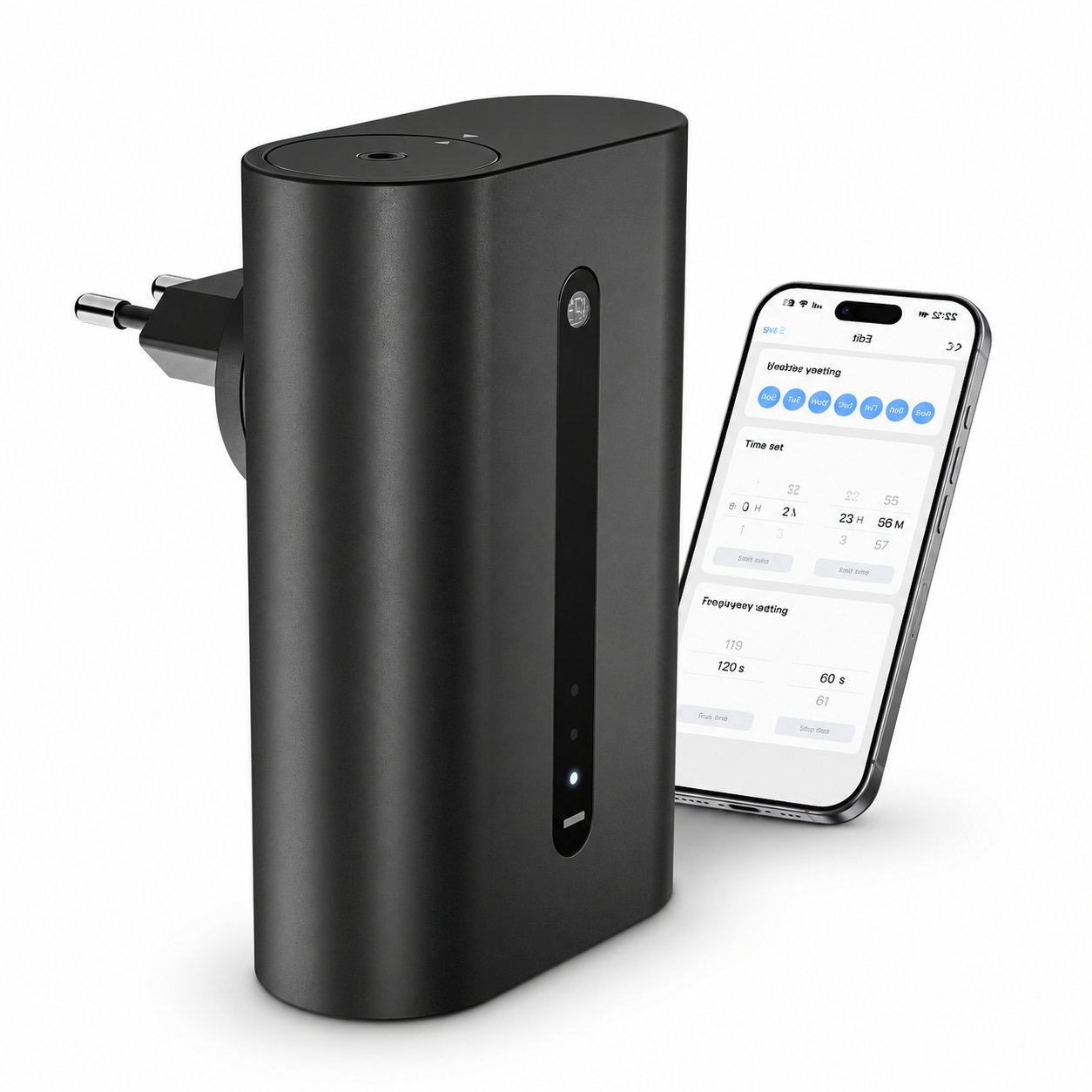
In professional settings, adjustability is essential. During the day, a reception area may need to smell a bit livelier than a meeting room. With Wi-Fi or app control, you can adjust the intensity and schedule to match opening hours, peak times, and the atmosphere you want to create. This prevents unnecessary energy consumption and keeps the scent experience consistent.
Retail, hospitality, and very large spaces
A store, salon, practice, or showroom serves a different purpose than a living room. Here, scent is part of your brand experience. Visitors should remember the space as well-maintained, warm, and distinctive, without a scent demanding their attention.
Choose a system that can handle the entire public space and take into account doors that open frequently, high ceilings, and fluctuating visitor numbers. A powerful standalone diffuser may be suitable for a defined commercial space. For very large facilities or multiple interconnected zones, an HVAC solution is often the most consistent choice. Depending on the installation and air distribution, systems in this category can serve spaces up to 2,000 m².
There’s a trade-off here. HVAC scent distribution provides a particularly uniform experience on a large scale, but requires a suitable installation and a well-thought-out scent strategy. For a small boutique, this is usually unnecessary. For a large showroom, hotel environment, or retail floor, however, it can be the key element that gives the entire space a single, recognizable signature.
Placement accounts for half the result
Even the right diffuser won’t perform as well in the wrong spot. Place the device on a stable, open surface and allow the scent to disperse freely. A cabinet behind a sofa, a low corner behind curtains, or a spot right next to a window will limit diffusion.
Also avoid direct heat sources and locations where children or pets might knock the device over. In a living space, chest height is often ideal: high enough for natural diffusion, low enough for the diffuser to blend unobtrusively into the decor. A stylish device can be visible, but it should never dominate the room.
Always give a new placement 24 to 48 hours before making a judgment. Your nose quickly gets used to a scent, while guests can still clearly smell it. So, every now and then, ask someone who’s just walked in for their impression, rather than constantly turning up the intensity.
Choose scent and capacity as a single unit—
not every scent has the same staying power. Fresh citrus and light floral scents tend to feel more subtle. Amber, vanilla, sandalwood, and spicy compositions often linger longer. If you’ve chosen a strong scent pod, a diffuser with a slightly larger capacity set to a low setting may work better than a small model running continuously at full power.
Your usage also determines your choice. Do you want a consistent, refined base scent every day? Then choose a device with smart scheduling and a refillable pod system. Do you only want to add ambiance during dinners, open houses, or business hours? In that case, flexibility is more important than maximum coverage at all times.
FUSIFY LX combines that scalability with an interior-friendly design, allowing you to create the same understated luxury in everything from a compact private space to a business environment. Ultimately, the best choice is the diffuser that doesn’t overwhelm your space with scent, but enhances its character. When your guests pause for a moment and remark on how pleasant it smells in here, you’ll know you’ve struck the perfect balance.