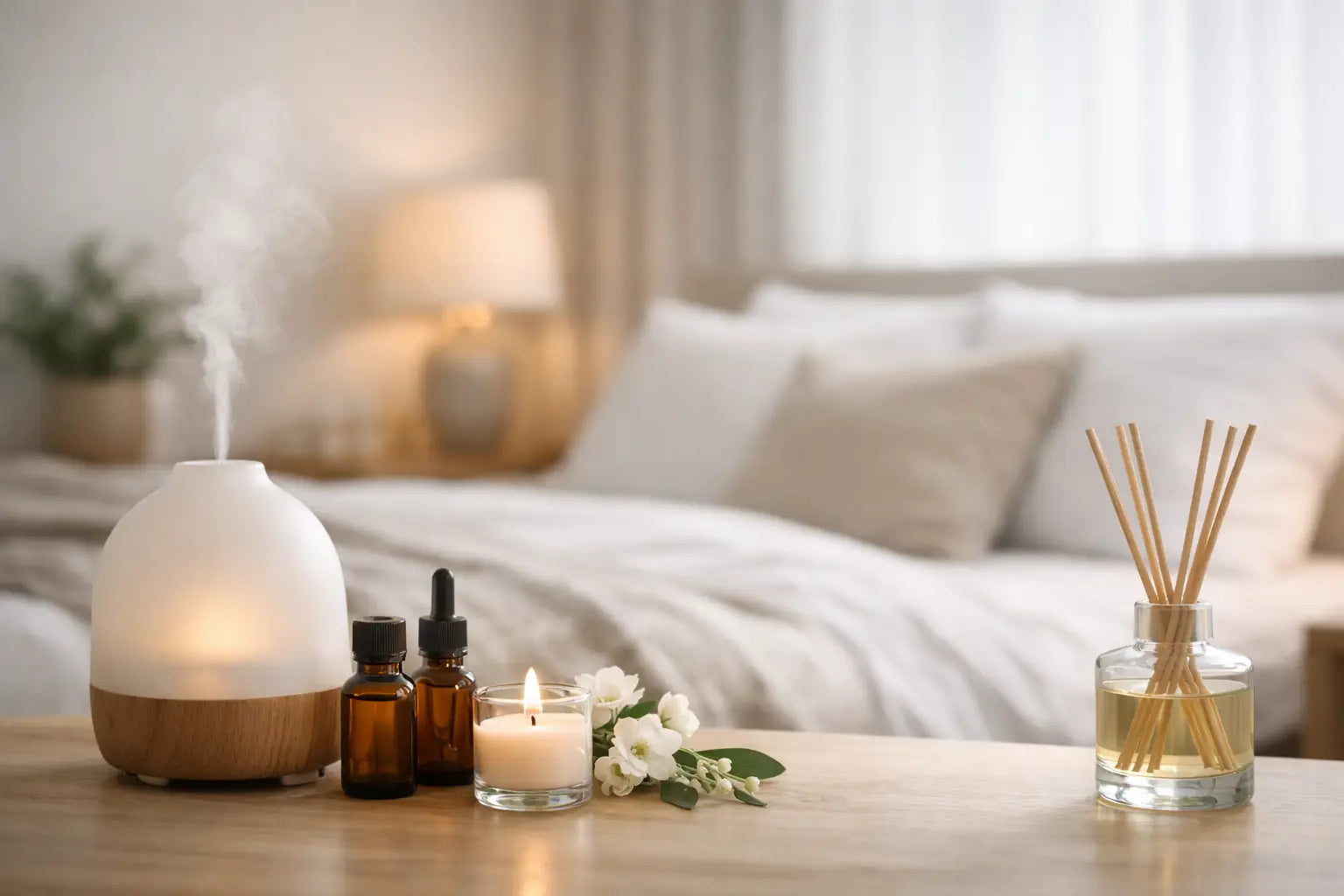
A bedroom can look perfect but still feel unsettling. Often, the difference isn’t in the bedding or the lighting, but in what you smell as soon as you walk in. If you search for “what home fragrance is best for a bedroom,” the short answer is: a soft, refined scent that complements the space without overwhelming your sense of calm.
The best bedroom scent isn’t one that fills the entire floor. It’s a subtle signature that feels clean, warm, or lightly floral and helps you let go of the day. More than just a scent. A feeling that lingers, exactly where you want it to.
Which home fragrance suits your bedroom and your bedtime routine?
In the bedroom, a scent works best when it aligns with the time of day. During the day, the space should feel fresh and tidy. In the evening, you’re more likely to seek softness, warmth, and tranquility. That’s why light woody notes, fresh linen accords, lavender, white musk, cashmere, neroli, and a subtle hint of vanilla are often great choices.
There’s no one-size-fits-all scent that works for everyone. Do you prefer a hotel-like, polished vibe? Then opt for clean linen, white tea, or soft musk. If you want your bedroom to feel warmer and more luxurious, sandalwood, cashmere, and a light amber note add more depth. For a light, peaceful feeling, lavender, bergamot, and neroli work particularly well.
The difference lies in the intensity. A scent should be noticeable when you walk into the room, but it doesn’t need to constantly demand your attention while you’re in bed. In a bedroom, refinement always trumps excess.
Start with the atmosphere you want to create.
Choosing the right scent doesn’t start with a specific fragrance note, but with the question of how you want to feel in your bedroom. A minimalist room with light fabrics and soft colors calls for a different composition than a bedroom with dark wood tones, velvet, and layered textures.
Fresh and tidy:
Fresh scents instantly give a room a well-kept feel. Think cotton, white tea, bergamot, green notes, or a soft citrus base. This style suits those who love a bright interior and the feel of freshly laundered linens.
. Be careful with sharp scents like lemon, grapefruit, or strong eucalyptus. In a bathroom or entryway, these can smell energetic and clean, but right before bed, they can be too stimulating. Instead, opt for citrus notes rounded out with musk, tea, or light floral notes.
Soft and relaxing
: Lavender is a well-known choice for the bedroom, but the quality of the blend makes all the difference. A pure, harsh lavender scent can quickly feel old-fashioned or medicinal. Lavender combined with white musk, bergamot, chamomile, or soft woody notes smells more modern, calmer, and more complex.
Neroli, orange blossom, and a subtle powdery note also fit into this family. They create a sense of calm without making the room feel heavy. Ideal for a bedroom that feels like a private suite.
Warm and Hotel-Chic
For a richer look, sandalwood, cashmere, tonka, amber, and vanilla are wonderful building blocks. They add warmth to a cool, minimalist bedroom and pair beautifully with dark furniture, wool, linen, and soft lighting.
The nuance is essential. A heavy amber or vanilla scent can quickly become overpowering in a small bedroom. Therefore, look for blends in which warm notes are lightened by, for example, bergamot, white flowers, or a clean musk accord. This keeps the scent elegant, even when the door is closed.
Choose the intensity based on the room.
A bedroom is usually smaller and more enclosed than a living room. What’s just right in an open living space might be too strong next to your bed. So don’t just consider the scent—also take into account the room’s size, ceiling height, ventilation, and the amount of fabric in the room.
Textiles trap scent. A bedroom with curtains, a rug, upholstered furniture, and plenty of bedding can hold onto scent longer than a minimalist space with hard floors. That’s wonderful for creating a lasting, luxurious ambiance, but it does require setting your diffuser to a lower setting.
For a compact bedroom of about 120 to 200 square feet, a device with modest coverage and precise dosing is often the best choice. In a large master bedroom or an open-concept bedroom with a sitting area, the diffusion can be a bit more expansive. The scent should envelop the room, not bounce off the walls.
A smart, quiet diffuser makes this easier. With app control, you can adjust the intensity at any moment: a little fresher while making the bed, softer in the evening, and completely off whenever you like. FUSIFY LX is designed for precisely that kind of controlled, interior-friendly scent experience.
Where should you place a diffuser in the bedroom?
Don’t place a diffuser directly on your nightstand or right next to your pillow. Even a light scent can be too intense when diffused continuously at close range. Instead, choose a spot that’s a bit further away, such as a low cabinet across from the bed or a wall near the entrance to the room.
Avoid placing it next to an open window, ventilation grille, or air conditioner. The airflow can carry the scent away too quickly or, conversely, distribute it unevenly throughout the room. A stable spot, out of direct sunlight and not behind a large piece of furniture, usually yields the best results.
? If you have an ensuite bathroom ? , let the bedroom retain its own scent identity. A fresh, spa-like scent in the bathroom can be wonderful, while the bedroom remains softer and warmer. That transition makes your evening ritual feel even more luxurious.
Scents that aren’t as well-suited for the bedroom
Not every beloved home fragrance is suitable for a space where you want to relax. Very sweet gourmand scents, strong coffee notes, leather, tobacco, intense oud, and sharp spices can be impressive in a living room, office, or boutique. In a bedroom, however, they’re often too overpowering.
Very fruity scents can also quickly come across as juvenile or fleeting. That doesn’t mean they never work, but they require balance. A hint of pear or fig paired with musk and wood can smell sophisticated. A strong, candy-like fruity scent usually doesn’t go well with the calm atmosphere you’re looking for in a bedroom.
If you’re sensitive to scents, suffer from migraines, are pregnant, or have pets in the bedroom, it’s best to be extra cautious. Start at the lowest setting, scent the room only briefly before going to bed, and stop if a scent feels unpleasant. Luxury isn’t about diffusing more, but about using the right amount.
Make scent part of your evening routine.
The most beautiful bedroom scent becomes more pronounced when it’s associated with a specific moment. For example, turn on your diffuser while you tidy up the room, close the curtains, and make your bed. After twenty to thirty minutes, the room will be subtly scented, without the scent needing to linger intensely all night.
Also, tailor the scent to the season. In spring and summer, white tea, citrus-musk, and light florals feel fresh and refined. In the fall and winter, sandalwood, cashmere, and soft amber create a greater sense of comfort. You don’t have to completely redecorate your home every time to create a new atmosphere. A different scent pod can give the entire room a different energy.
Ultimately, don’t choose the scent that hits you the hardest, but the one that makes your shoulders drop automatically. When your bedroom feels clean, soft, and personal the moment you walk in, peace of mind begins even before you turn off the light.